NEW - Vedic/Hindu Calendar for 2013

NEW - Vedic/Hindu Calendar for 2013
Shri Ramapir Mandir/Temple in Islamic Republic of Pakistan

Monday, May 2, 2011

PM underscores need to document religious monuments, Pakistan

By PHP Staff
Monday, May 02, 2011

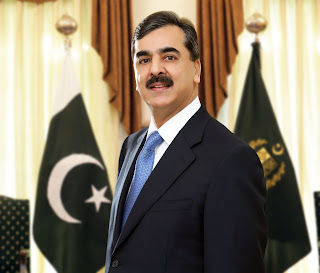
LAHORE (APP)- Prime Minister Syed Yusuf Raza Gilani has felicitated the Christian community around the world, especially those living in Pakistan, on the behalf of the government and people of Pakistan on the occasion of Easter.The Prime Minister expressed these views while meeting a three-member delegation which presented a book titled “Churches of Pakistan” to him here on Sunday.Federal Minister for Information Dr. Firdous Ashiq Awan was also present on the occasion.

Premier Gilani observed that common characteristics bind Christian and Muslim communities in an unbreakable relationship of mutual trust, respect and brotherhood.  Believing in the prophethood of Jesus Christ and Bible as a divine Book is part of our faith as the Muslims, he added.

Pakistan remains committed to the well-being and equal status of minorities as citizens of Pakistan, as enshrined in the constitution and Quaid’s assurances in this regard are the guiding principles for harmonious relations among communities”, said the Prime Minister while speaking to the delegation.

The Prime Minister also paid tribute to Pakistani Christian community for their valuable contributions to the national development. He appreciated the contribution of the community members for vital sectors such as defence, education, health, politics, social welfare and others.

,”There is not a single walk of national life which does not have the representation  and contribution of our Christian brethren.They are equal partners in the national development side by side with their other countrymen”,he added.

Commenting on the Easter Sunday, the Prime Minister said that it is a great feast day and culmination of not only Holy Week but the whole year, as on this day the Resurrection of Jesus Christ is celebrated.

The Prime Minister added that this day is considered the most important day in the Church year, as it is the day on which Jesus rose from the dead.

While lauding the efforts of the writer of the book the Prime Minister said that it truly reflects the historic perspective of the Christian community and their contributions towards the development of Pakistan.

He said that existence of worship places of all the major religions in Pakistan exhibit historical evidence of the tolerance and respect for each other’s faith. He also underscored the need to document other religious monuments and historical sites to showcase the cultural diversity of Pakistan to the world.

Earlier, Mansoor Rashid publisher of the book, Syed Javaid A.Kazi,acclaimed photographer and Dr. Safdar Ali Shah an accomplished writer presented the first copy of the book to the Prime Minister and highlighted their efforts to document an important facet of the cultural history of Pakistan.

They mentioned that the contents and quality of presentation was a befitting Easter gift for the Christian community and will add to their happiness on the occasion.It will also bring joy to many others who are or have been associated with these historical buildings, they added.

While talking to APP, Mansoor Rashid said that this is a coffee book with prolific pictorial discription of the buildings and gives all the architectural details as well.

Muslims put bus on fire, 15 Hindus burnt alive in Pakistan

By Gopinath Kumar (editor-in-chief)
Monday, May 02, 2011

Quetta (Pakistan): Atleast 15 people, including women and children, were burnt alive when unidentified criminals torched a passenger bus near Sibi in Pakistan's Baluchistan province in the wee hours of today, police said. Those killed include seven children, three men belonging to the minority Hindu community who were identified as Kapil, Varsheen, and Pujamal, they said."

The incident occurred in the town of Sibi, about 160 kms from Quetta, when the bus coming from Jacobabad in Sindh province and going to Quetta had stopped at a road side restaurant for a break," Deputy Commissioner of Police Sibi, Naseer Ahmed Nasir said from Sibi. Witnesses said that four armed men, riding on two motorcycles, reached there while two of them entered the bus, sprinkled petrol and then they put it on fire. Many passengers could not flee due to severe fire, police said."The driver and the conductor of the bus fled from the scene and we are seaching for them. The frontier corps and police have cordoned off the area and are searching for the suspected criminals who set the coach on fire," Nasir said.

Police said that they were not ruling out the possibility that the driver and conductor have fled because the engine might have got fire.Police also suspects that the attack may be ethnic as dozens of non-locals were on board of the bus. Baluch seperatists have been carrying out attacks on government and security installations in the province for the last few years and have in the past targetted settlers from other provinces who reside in different parts of Baluchistan.

Nasir said that those killed in the fire included five persons of one family including three children and their grandparents."Since one door was burnt immediately there was no escape route for the passengers inside the bus. Most of the male passengers had got down to say prayers or have food," the deputy commissioner said.He said it was confirmed that the dead included three Hindus who were residents of Jacobabad who were going to Quetta for apparently some business.He said the wounded passengers were rushed to the Sibi civil hospital where they were getting treatment.

Pakistan Army Sexually Abusing Minority Women - NGO

By PHP Staff
Monday, May 02, 2011
(Photo : Pakistan Army. In its annual survey on human rights the State)

New York,  (IANS) The Pakistani army is sexually assaulting minority women and using them as sex slaves, alleges the European Organization of Pakistani Minorities (EOPM), an NGO working for the rights of minorities in Pakistan.

In a prayer-cum-demonstration held at the UN, it said the Pakistani army is taking minority women away from their families, raping them and then using them as sex slaves.

Referring to the December attacks on Christians in Lahore, the organisation alleged that attacks on minorities in Pakistan were increasing.

Using a symbolic broken chair to highlight the plight of minorities in Pakistan, more than 100 women from different faiths lit candles at the prayer to highlight the plight of minority women allegedly being raped and killed by the Pakistani Army.

Expressing concern over the plight of women of Balochistan and Gilgit Baltistan, the organisers said army officials are taking them to torture camps, raping them and then using them as sex slaves.

"One such case is of that Zarina Marri who is a 23-year-old school teacher from Quetta and is being used as a sex slave by the Pakistani Army," the EOPM said in a statement.

It said international observers and the media should be allowed free access to Balochistan and Gilgit Baltistan to meet families whose women members have disappeared and yet no police cases have been registered.

The organisation demanded that the UN organise a special session on the plight of Pakistani women.

According to the EOPM, religious minorities constitute much more than five percent - as claimed in Pakistani census - of Pakistan's 160 million population.

However, the census intentionally keeps minority population low to deny them greater representation, it said.

Christians, Sikhs, Hindus and other minorities are constant targets of attacks in Pakistan, it said, citing Minority Rights Group International, a watchdog organisation, which ranked Pakistan last year as, "the world's top country for major increases in threats to minorities since 2007".

Pakistan has also been listed seventh among the 10 most dangerous countries for minorities, after Somalia, Sudan, Afghanistan, Iraq, Myanmar and Congo.

Pakistan faces pressure after Osama bin Laden (al Qaeda leader) killed near Islamabad

By Mohammad S.Solanki (Executive Editor)
Monday, May 02, 2011
( Photo : Osama bin laden dead head killed photo picture image, Pakistan)

ABBOTTABAD, Pakistan (Reuters) - Pakistan declared the killing of Osama bin Laden a "major setback" to global terrorism but it will inevitably come under pressure to explain how the al Qaeda leader was holed up in a mansion near a military facility.

Bin Laden was killed in a dramatic night-time raid by U.S. helicopters and troops on his hideout in Abbottabad, a town that is home to a military academy and that is less then two hours' drive from the Pakistani capital, Islamabad.

"Osama bin Laden's death illustrates the resolve of the international community, including Pakistan, to fight and eliminate terrorism," the government said in a statement. "It constitutes a major setback to terrorist organisations around the world."

However, it was not clear whether the Pakistan military was involved in the operation and there was no official comment from the government for several hours after the news of bin Laden's, raising the possibility that Islamabad was taken by surprise.

That bin Laden, mastermind of the Sept. 11, 2001, attacks on the United States, was not hiding in mountains along the border but in relative comfort near a military academy will bolster those who have long argued that Pakistan has been playing a duplicitous hand.

Just 10 days ago Pakistan's army chief addressed army cadets at that very academy, saying the country's military had broken the back of militants linked to al Qaeda and the Taliban.

Washington has in the past accused Pakistan of maintaining ties to militants targeting U.S. troops in neighbouring Afghanistan. Relations have soured in recent months over U.S. drone attacks and CIA activities in the country.

Pakistan's powerful intelligence agency, the ISI, has long been suspected of links to al Qaeda's precursor, the Haqqani network, cultivated during the 1980s when Jalaluddin Haqqani was a feared battlefield commander against the Soviet Union in Afghanistan.

Pakistan's arch-rival, India, was quick to comment, saying the news underlined its "concern that terrorists belonging to different organisations find sanctuary in Pakistan".

"For some time there will be a lot of tension between Washington and Islamabad because bin Laden seems to have been living here close to Islamabad," said Imtiaz Gul, a Pakistani security analyst.

"If the ISI had known, then somebody within the ISI must have leaked this information," Gul said. "Pakistan will have to do a lot of damage control because the Americans have been reporting he is in Pakistan ... this is a serious blow to the credibility of Pakistan."

FLAMES, GUNSHOTS, A BLAST
(Photo : Map of Abbottabad District in NWFP State of Pakistan)

Abbottabad is a popular summer resort, located in a valley surrounded by green hills near Pakistani Kashmir.
Islamist militants, particularly those fighting in Indian-controlled Kashmir, used to have training camps near the town.

A Reuters reporter in the town on Monday said bin Laden's single-storey residence stood fourth in a row of about a dozen houses, a satellite perched on the roof above a walled compound. A helicopter covered by a sheet sat in a nearby field.

Mohammad Idrees, who lives around 400 meters from the house, said local residents were woken in the night by the sound of a big explosion.

"We rushed to the rooftop and saw flames near that house. We also heard some gunshots," Idrees said. "Soon after the blast, we saw military vehicles rushing to the site of the blast."

Another resident, Nasir Khan, said that commandos had encircled the compound as three helicopters hovered overhead.

"All of a sudden there was firing towards the helicopters from the ground," said Khan, who had watched the drama unfold from his rooftop. "There was intense firing and then I saw one of the helicopters crash."

A Pakistani military helicopter crashed near Abbottabad on Sunday night, killing one and wounding two, according to local media. It was unclear if the crash was related to bin Laden's death, but witnesses reported gunshots and heavy firing before one of two low-flying helicopters crashed near the academy.

Sohaib Athar, whose profile says he is an IT consultant taking a break from the ratrace by hiding in the mountains, sent out a stream of live updates on Twitter about the movement of helicopters and blasts without realising it was a raid on the world's most hunted man.

Some of his early tweets were: "Helicopter hovering above Abbottabad at 1 am (rare event); Go away helicopter - before I take out my giant swatter."

Then he reported his window rattling and a bang. "I hope it's not the start of something nasty," he tweeted.
Soon after there were blasts. There were two helicopters, one of them had gone down, Athar wrote.

When he learnt it was bin Laden killed in Abbottabad, he tweeted: "ISI has confirmed it
(Additional reporting by Rebecca Conway, Zeeshan Haider, Kamran Haider, Faisal Mehmood and Chris Allbritton; Writing by John Chalmers; Editing by Miral Fahmy)

Tamil (Hindu) Religious Lessons To Be Held In Schools Soon, Malaysia

By PHP Staff
Monday, May 02, 2011
(Photo : Malaysia Hindu Sangam (MHS) in Malaysia)

MALAYSIA (The Star): The Malaysia Hindu Sangam is taking the necessary action to ensure Tamil religious classes are held in schools and temples nationwide by next year. It quoted its president R.S. Mohan Shan as saying that the organization would have 2,500 locally-trained religious teachers to conduct the classes in the next five years.

Shan said lack of religious and moral education among the younger generation had resulted in an increase in social issues affecting the Indian community. And the Sangam would cooperate with other Indian organisations to solve social problems affecting the Indian community.

Hindus Reclaim 5,000 Years of History in Kashmir , India

By PHP Staff
Monday, May 02, 2011
( Photo : A Hindu worships in Srinagar a capital city for Kashmir, India)

KASHMIR : Though the Kashmir valley has for centuries had a Muslim majority, its Hindu population - commonly known as Pandits - were always an integral part of the community. Hindus claim their history here dates back thousands of years.

When a separatist militancy gathered pace two decades ago, up to 400,000 Hindus either fled or were driven out. But over the last couple of years, something special has been happening in Kashmir. Sanjay Tickoo and other members of the small Hindu population that remained have set about restoring the temples, shrines and other sacred places. He claims several dozen such places have been repaired or reactivated.

"After the mass exodus of the Pandits, around 98 per cent of the temples were not attended. Only 23 temples have remained in constant use," said 42-year-old Mr Tickoo, president of the Kashmiri Pandit Sangarsh Samiti, an NGO."We are doing it to improve Kashmiri society. But when we say we have a 5,000-year history in Kashmir... the history belongs to me only because of my presence in the valley. My identity is directly linked to the temples. If they disappear I cannot claim we have a 5,000-year history in the valley."

The plight of Kashmir's Hindus is one of the overlooked tragedies of south Asia. While Kashmir's Muslim population has attracted international attention for its long and often violent struggle for autonomy, which has resulted in the Indian authorities dispatching hundreds of thousands of troops and paramilitaries, the Pandits are often forgotten, even in their own country. Today, it is estimated there are fewer than 4,000 still here in the valley.

Sathya Sai Baba's Passing, a Change in India's Religious Landscape

By PHP Staff
Monday, May 02, 2011
(Photo : Sathya Sai Baba dead on Sunday in India and death news spread quickly all over)

[Note: Although Sai Baba was born to Hindu parents, raised in a Hindu community, took a Hindu name, wore the saffron-colored vestments of a Hindu sannyasin, will be honored by Hindu funeral rites; though he quoted from Hindu scriptures and directed an overwhelmingly Hindu following to sing traditional Hindu devotional songs, even so, he did not profess to be a Hindu. Still, in the minds of countless westerners, his was the image conjured when someone spoke of Hinduism and his passing is relevant to the Hindu community.]

UK, April 25, 2011 (The Telegraph): Sathya Sai Baba, who died yesterday, probably aged 84, was India's most famous, and most controversial holy man. To his followers, Sai Baba was a living God; he would frequently liken himself to such figures as Christ, Krishna, and the Buddha, claiming that he was the avatar of the age.

Sai Baba's reputation was founded largely on claims of his miraculous powers. It was later tarnished by accusations of quackery and even pedophilia, though he was never convicted.

He is thought to have been born, as Sathya Narayana Raju, on November 23 1926, into a poor farming family in the village of Puttaparthi, in the arid state of Andhra Pradesh.

According to legend, as a child he would avoid places where animals were slaughtered and bring beggars home to be fed. At the age of 14, after apparently being bitten by a scorpion, he began to display signs of delirium and hallucinations. Convinced that he was possessed, his parents summonsed a local exorcist who shaved the boy's head, scored four X's into his scalp, and poured the juice of garlic and lime into the wounds. Shortly afterwards, he declared himself to be a reincarnation of Shirdi Sai Baba, one of southern India's most revered saints, who died in 1918. Challenged to prove his claim, he is said to have thrown some jasmine flowers on the floor; in falling the flowers arranged themselves to spell out the name "Sai Baba" in Telugu.

From humble beginnings, his following grew until by the end of the 20th century it was estimated to number more than three million people around the world. This made him a powerful and influential figure in Indian social and political life; he numbered many high-ranking politicians and public figures.

Sai Baba established an extensive network of schools and colleges throughout India, helping millions of people. The humanitarian projects under his name, with which he was only marginally involved, became a force paralel to the government in parts of India. The organization is estimated to have assets around US$ 8 billion, and could fall into a succession war.

Sathya Sai Baba was certainly wrong about one thing having, in 1963, announced that he would live until 2020. It remains to be seen whether another prediction is closer to the mark - that in 2028 his "third incarnation", Prema Sai, will be born in the village of Gunaparthy in Karnataka state. "With his [Prema Sai's] efforts, love, goodwill, brotherhood and peace will abound throughout the world," Sai Baba declared. "He will receive universal recognition from mankind."

Daily Inspiration from Pakistan Hindu Post (PHP)

By PHP Staff
Monday, May 02, 2011
 (Members of the Pakistani Hindu community celebratin Holi in Karachi, Pakistan on Sunday, Feb. 28, 2010)

I am a British born guy of Pakistani and Burmese descent. I’ve been to Pakistan a few times and must say that the indigenous Hindu population should be given greater respect and prominence. The Pakistani treatment of Hindu citizens should be much improved than at current as you are an amazingly dynamic component of the country. Respect to you all.

By Farid M. Khan (United Kingdom)

Monday, April 25, 2011

2011 Hindu Pilgrimage to Balochistan’s Hinglaj Temple, Pakistan

By PHP Staff
Monday, April 25, 2011

 ---------- Forwarded message ----------
From: Ramesh (PHP)
Date: Sun, Apr 17, 2011 at 3:30 AM
Subject: 2011 Pilgrimage to Balochistan’s Hinglaj Temple, Pakistan
To:Pakistan Hindu Post (PHP)

(Photo : 2011 Hanglaj Mata Festval Bannar by Pakistan Hindu Post (PHP), HRF, Pakistan)

Namesty

     Hope you will be fine there please note that 2011 Hanglaj Mata Festval  has been postponed new date is now 24 to 26 April 2011 and we from Rahim Yar Khan going on 22-April.

NOTE : Every year thousands of Hindus from Pakistan and India gather to attend a four-day ritual at the Hinglaj Mata Temple in Balochistan. The temple is situated on the Makran coast in the Lyari district of Balochistan. Hindus believe that the head of goddess Sati had fallen in the area of Hinglaj Mata and since then, it has remained a revered pilgrimage site for Hindus.

 (Photo : 2011 Hanglaj Mata Festval bannar by Pakistan Hindu Post (PHP), HRF, Pakistan)
(Photo : 2011 Hanglaj Mata Festval bannar by Pakistan Hindu Post (PHP), HRF, Pakistan)

We will start our yatra from Rahim Khan on 22nd April by bus. We are arrange a Bus for Yatra and our Rout is as following : -

Kalka Mata Temple Sukkur
Ram Dev Temple Tando Allah
Son of Guru Nanik (Hindu) Baba Sri chand Tample
Durga Mata Temple Thuttha
Shiv Temple Karachi
Chander Goup Liyari
Hanglaj Mata and Return back

With Regards
Ramesh Jaipal

Saraikistan Province: PML-N Falling Into Zardari’s Trap, Pakistan

By Aziz Narejo (Indus Herald)
Monday, April 25, 2011
(Photo : Saraikistan demand at Larkana city, Pakistan)

Islamabad : In a glaring example of cynical, reactionary and unprincipled politics, Punjab CM Shahbaz Sharif the other day demanded that Sindh be divided and Karachi be made a province. His statement justifiably created furore in Sindh and the parliamentary parties including PPP, MQM and ANP as well as other politicians and activists swiftly condemned the unimaginative and unscrupulous statement by the PML-N leader.

The PML-N government and Punjabi nationalists seem to be under considerable pressure as the demand for a separate Siraiki province is gathering momentum in southern Punjab but this was most crooked and uncalled for response that could ever come from anyone with even the slightest political wisdom. PML-N leader was obviously trying to get back with the PPP. It may be noted that PM Gilani has suggested the creation of a new province in southern Punjab and PPP manifesto committee is deliberating to make it a part of the PPP manifesto for next elections.

No Sindhi would have any objections if Shahbaz Sharif, other PML-N leaders and Punjabis as a whole turn into nationalists but all the Punjabis and others should understand that Sindh and PPP are not ONE and the same. They are two separate entities. PML-N can’t and shouldn’t get back with the PPP by hurting Sindh. It must agree or disagree with the Siraiki people’s demand for a separate province with the force of arguments and not by playing tit for tat, conspiratorial and ugly politics.
PML-N should also realize that with this kind of politics they will be completely routed out from Sindh and their aspirations to become a “national” party or to form next government will die for ever.

Do they understand that this is exactly what PPP co-chairperson Asif Ali Zardari wants the PML-N to do? Are they willingly falling into the trap set by Zardari’s PPP? Do they realize that with this kind of politics, they will forever become a Central Punjab party? Are there any sane elements in PML-N who would rein in Shahbaz Sharif and the likes of him in their party? Guess not. Good luck to them on their journey to doom.

 (Photo : Proposed Map for Saraikistan province in Pakistan)

Introduction : Saraik is a term used by some Seraikis to denote the southern region of the Punjab province of Pakistan, inhabited by Saraiki-speaking people. Many people contest the status of Saraiki as a separate language.. Though, it has overwhelming influence of Punjabi and Sindhi; Seraiki can be called a separate language of Indo-Aryan Family. When compared to its sister languages: Sindhi and Punjabi, Saraiki is far smaller and much behind in literature and in many other ways..Historically speaking, Saraiki, before Independence, never created a sense of separate Saraiki identity particularly in Southern Punjab..Customs and traditions practised by the people of Southern Punjab have largely been similar to those of Punjabis and Sindhis..However, national recognition of Saraiki as a separate language, giving it an official status, a Saraiki province, a Saraiki regiment in Army, establishment of Saraiki radio and television are among primary demands of Saraiki movement.

In 2002, the Saraiki nationalists claimed that there are over 30 million Saraiki speakers in Pakistan, mostly in southern Punjab, and also in the adjacent parts of Sindh and Balochistan provinces, mainly based in the former princely state of Bahawalpur (princely state).

Beginning in the 1960s, Saraiki nationalists have sought to gain language rights and lessen,what the nationalists propagated as, "Punjabi control over the natural resources of 'Saraiki' lands". This has led to a proposed separate province Saraikistan, a region being drawn up by activists in the 1970.The 1977 coup by General Muhammad Zia-ul-Haq of Pakistan, a centralist ruler, caused the movement to go underground. After his death in 1988 allowed the Saraiki movement to re-emerge openly with the goals to have a Saraiki nationality recognised, to have official documents printed in Saraiki, a Saraiki regiment in the Pakistan Army, employment quotas and more Saraiki language radio and television.

Inscription throws new light to Hindu rule in Afghanistan

By PHP Staff
Monday, April 25, 2011
(Photo : The alter at Kabul's Hashari Natha Temple (Hindu Mandir) in Afghanistan)

Kolkata (India) : A stone inscription in Sanskrit, recovered from the city of Mazar-i-Sharif of northern Afghanistan a few years ago, has thrown new light on the reign of the Hindu Shahi ruler `Veka' in that country.

The recovery and significance of the inscription, telling a story of the Hindu ruler Veka and his devotion to lord `Siva', was told by leading epigraphist and archaeologist Prof Ahmad Hasan Dani of the Quaid-E-Azam University of Islamabad at the ongoing Indian History Congress here.

If historians, preferred to revise the date of the first Hindu Shahi ruler Kallar from 843-850 AD to 821-828 AD, the date of 138 of present inscription, if it refers to the same era, should be equal to 959 AD which falls during the reign of Bhimapala'', Dani said in a paper `Mazar-i Sharif inscription of the time of the Shahi ruler Veka, dated the year 138'', submitted to the Congress.

The inscription, with eleven lines written in `western Sarada' style of Sanskrit of 10th century AD, had several spelling mistakes. ``As the stone is slightly broken at the top left corner, the first letter `OM' is missing'', he said.
According to the inscription, ``the ruler Veka occupied by eight-fold forces, the earth, the markets and the forts. It is during his reign that a temple of Siva in the embrace with Uma was built at Maityasya by Parimaha (great) Maitya for the benefit of himself and his son''.

The inscription was brought from Mazar-i-Sharif, where the tomb of Hazrat Ali, son-in-law of Prophet Mohammed is located, to Pakistan and is currently housed at the Islamabad Museum, Dani said.

Dani said ``the inscription gives the name of the king as Shahi Veka Raja and bestows on him the qualification of `Iryatumatu Ksanginanka'.... and (he) appears to be the same king who bears the name of Khingila or Khinkhila who should be accepted as a Shahi ruler''.

Dani further said ``he may be an ancestor of Veka deva. As his coins are found in Afghanistan and he is mentioned by the Arab ruler Yaqubi, he may be an immediate predecessor of Veka deva...... Both the evidences of inscription and coins suggest that Veka or Vaka should be accepted as an independent ruler of northern Afghanistan.

``Thus we find another branch of the Shahi ruler in northern part of Afghanistan beyond the Hindukush. Veka is said to have conquered the earth, the markets and the forts by his eight-fold forces, suggesting that he must have himself gained success against the Arab rulers of southern Afghanistan''.

Dani observed that going by the findings it seemed that during the rule of the Hindu Shahi ruler Bhimapala there was a break in the dynasty -- one branch, headed by Jayapala, ruled in Lamaghan and Punjab, and another branch, headed by Veka, ruled in northern part of Afghanistan.

``The northern branch must have come to an end by the conquest of Alptigin in the second half of tenth century AD'', he said.

2011 Baisakhi Mela at Narowal by Hindu Sudhar Sabha-Pakistan (HSSP), Pakistan

By Dr. Radhe Shyam Kumar (Executive Editor)
Monday, April 25, 2011

---------- Forwarded message ----------
From: Punjab PHP
Date: Mon, Apr 25, 2011 at 8:28 AM
Subject: Baisakhi Mela report of narowal, Pakistan
To:Pakisan Hindu Post (PHP)

(Photo : 2011 Baisakhi Mela bannar by Hindu Sudhar Sabha, Pakistan (HSSP) and NCIDE, Pakistan)

Namastay

     Hindu Sudhar Sabha, Pakistan (HSSP) arranged a 2011 Baisakhi Mela in Narowal city where Hindus,Sikhs, and Muslims people participated. The chief guest of this Baisakhi Mela at Narowal were Mr.Gulam hussan a general secretary for Pakistan People Party (PPP) for Punjab province of Pakistan.

Vaisakhi (Punjabi: ਵਿਸਾਖੀ visākhī, Hindi: बैसाखी baisākhī, also known as Baisakhi, Vaishakhi, or Vasakhi) is an ancient harvest festival celebrated across North India, especially in the state of Punjab.

In Sikhism, it is one of the most significant holidays in the Sikh calendar, commemorating the establishment of the Khalsa at Anandpur Sahib in 1699, by the 10th Sikh Guru, Guru Gobind Singh. This day is also observed as the beginning of the Hindu solar new year celebrated by people across Nepal and other regions of India.

Best Regards,
Amarnath Randhawa

Wednesday, April 20, 2011

(Exclusive Report) Culture Kalash in Pakistan

By Oscar Rickett (The Observer)
Wednesday, April 20, 2011
(Photo : Set adrift: at the top of the Bumboret valley looking toward Afghanistan. Photographs: Oscar Rickett for the Observer, Pakistan)

I am standing on a roof in the mountains of the Kalash valleys. Below me hundreds of men are screaming and shouting as two small wooden balls are hit up the slopes by opposing teams of players. Women in intricately designed, brightly coloured dresses are looking on, talking and laughing. One player draws back his long wooden club and hammers the ball onward. Cries of joy fill the air.

"What just happened?" I ask the player. "We cheated," he laughs. "The ball was lost in the snow so I took a ball from my pocket and hit that one. Don't tell the other team. If they knew, we would lose this point."

The ball flies on up the four-mile-long course, over rivers and up banks. That night, the winning team will sacrifice an ox, paid for by the losers. Everyone will get drunk. It is winter and there is not much to do. The game is chikik gal.

In February this year, the Taliban assassinated Pakistan's Christian minister for minorities, Shahbaz Bhatti. He was the only politician representing the non-Muslim populations of Pakistan. His smallest ward was the Kalash, a 3,000-strong animist tribe living in the mountains of the Hindu Kush, in Pakistan's wild northwest frontier. A persistent myth tells of their descent from members of an errant division of Alexander the Great's army, which ripped through the mountains of northern Pakistan more than 2,000 years ago.

In Rudyard Kipling's time, the Kalash were known as the "black Kafirs" and their land was Kafiristan, the setting for his tale of insanity and idolatry, The Man Who Would be King. The "red Kafirs", their neighbours, the subjects of Kipling's story, were brutally converted at the end of the 19th century. They became Nuristanis, "enlightened ones", and their rugged mountain land is one of the centres of the war against the Taliban.

(Photo : The Kalash tribe is said to descend from Alexander the Great's army, but now it is fighting to preserve its traditions in a Taliban stronghold)

The Kalash live in three valleys (Bumboret, Birir and Rumbur) by the Afghan border in the province of Khyber Pakhtunkhwa. In winter, flights to Chitral, the nearest town, are routinely and consistently cancelled without warning. My journey from Islamabad was by road, through Mardan and Dir up to the Lowari tunnel and then down the other side. In the winter, when the Lowari pass is blocked by snow, the tunnel is the only way of travelling to Chitral by road. Its construction began in 2005 and it is now open for a few hours every day. It is less a tunnel and more a 9km-long cave.

But in spite of the constant sense of peril it evokes, the tunnel is changing Chitral and the Kalash valleys. Previously, getting to the nearest city, Peshawar, meant a trip through Afghanistan. Now the tunnel brings supplies from the rest of the country. With access comes fear. "Extremists use the tunnel to come here," says Taj Udeen, a local police commander. "We have to make sure we know who is coming to our district."

They certainly knew we were coming. Tourism has dropped off steeply since 9/11 – in the 1990s thousands of people visited Chitral annually, now that figure is below 100 – and we were among few outsiders to visit the Kalash valleys in the past year. Desperate to make sure nothing happened to our four-strong team, 10 armed policemen accompanied us. We spent a month in the valleys. They never left our side.

For centuries, the Kalash have been fighting to preserve their traditions. People are converted to Islam every year. "Extremist Muslims prey on weak people and create internal divisions," Imran Kabir, a Kalasha polymath (he reveals that he is, variously, a butcher, teacher, writer and junkyard owner) tells me.

A policeman stands outside the Bashali, the house of menstruation and childbirth.

A local teacher, Akbal Shah, recounts the story of his father, who worked as a frontier policeman and converted to Islam because he was the only Kalash man in an all-Muslim unit. "He was not educated, so they said to him that if he didn't convert he wouldn't go to heaven. He ended up believing them because he didn't want to stand out. The Muslims are a big majority, they are pressing us everywhere." Deathbed conversions are common and people talk of being offered wives and money if they convert. When I interviewed one of the local imams, Nasir Abdul, at his newly built mosque, he spoke of the love he has for the Kalash people before going on to say that he "hopes they will convert to Islam so that they can go to paradise". He is a friendly man who does not pay people to convert, but his objective is the same: the end of the Kalasha religion.

Not all Muslims in the area feel this way. One convert who everyone calls "Mullah" tells me: "Everyone should be free to believe what they like." And while Muslims are not allowed to convert to the Kalash religion, men like Mullah participate in Kalash festivals and rituals in a way that makes you believe that if they could convert back, they would.

(Photo : Kalash Tribe in Kafiristan group of girls dancing what a beauty)

Wali Khan, the Kalash headmaster of a primary school in Bumboret valley and a charismatic and popular figure, has worked tirelessly to improve the standards of schooling in the valleys (until the 1990s, there were no official schools). His family is typical in that two of his three brothers have converted to Islam (the one who hasn't is confusingly nicknamed Mujahideen). He tells me that for "two years my brother was living like an imam. But then he got bored and now he is drinking and smoking and dancing!" Drinking means the local moonshine, tara, which tastes like schnapps, or homemade wine, which tastes like sherry. Kalash dealers routinely and illegally sell both drinks to Muslims.

The Kalasha Dur, built by a Dutch NGO.

Another source of tension is the aid that the Kalash receive from NGOs and the government. At the centre of this controversy is the Kalasha Dur – a museum, small hospital, library, hostel and school complex for the Kalash (which Muslims cannot attend), housed within an absurdly Greek-looking palace built by the NGO Greek Volunteers, with help from Greece's government body Hellenic Aid. Greek Volunteers's director, Athanasios Lerounis, a long-time champion of the Kalash and the man who raised the money to build the centre, assures me that though there are "similarities to the Ionic style", the building came from "the local architecture". The attempted olive growing that goes on is, however, more likely to be an ancient tradition of Athens.

In 2009, a Taliban unit stole into the valleys at night and kidnapped Lerounis. They had been tipped off by locals sympathetic to their cause and came to the Kalasha Dur during a night when only two security guards were posted. One guard fled while the other stood his ground and was killed. Lerounis was taken swiftly across the Afghan border to Nuristan. The Greek teacher's ransom, thought to be up to £1m, was paid and he returned to Greece. The security services will not let him return to Pakistan because they believe his presence in the country is dangerous. Lerounis, who wants to come back to the valleys, tells me he does not want to talk about the kidnapping because doing so would endanger the Kalash people. Whatever they think of the Taliban's policies, the Kalash stress their neutrality: they are too vulnerable to court trouble.

The kidnapping highlights the security risk presented by the lavish Greek building: in a small, rural community, it sticks out. Locals say that there is a Taliban plot to blow up the Kalasha Dur. The building's detractors say that the exclusion of Muslims from the school only adds to the resentment felt by those who feel that the Kalash get too much money from outsiders.

 (Photo : Kalash delegation with Sarah Cheema an organizer IYCF. The IYCF was first ever international conference which was held in Islamabad at PNCA. Names of Kalash delegation who were participated in this event are Luke Rehmat, Jamal Bibi, Missro Khunza and Natija, Pakistan)

Wali Khan used to work with Lerounis compiling a Kalasha alphabet, but left because he didn't like the division the Kalasha Dur had created. "The Kalash and the Muslims have to get along; they have to live side by side," he says. "So why make a school in which only one kind of person can be taught?" Lerounis argues that the school was built in response to a need highlighted by the Kalash community: "I asked them what they wanted and they told me they needed a school… There are many Muslim schools and many madrasas. The Kalash need this. There is a division because of their tradition, not because of our building."

The Kalasha Dur's first-aid centre treats Muslims, and Greek Volunteers have also built Muslim schools and secured a clean-water supply that is used by everyone. Yet the suspicion remains that they do as much harm as good. Imran Kabir believes that Lerounis created a culture of dependence so that in the end people "treated him like a God". Instead of praying to their maker, Kabir told me, they would pray to Lerounis. Since he has been gone, the Kalash have started helping themselves again, something Lerounis would probably approve of.

Nabaig (like Prince, he has no second name) is the first Kalash lawyer. He works in Chitral and, when he is in court, wears a suit and tie that makes you think of Reservoir Dogs. Back in the valleys, in his traditional clothes, he tells me that the United Nations Development Programme money that comes to the valleys "goes in the pockets of the politicians and higher personalities". The same is said of the international money that came to the country to help relieve flooding in 2010.

"None of the money came to us," says Nabaig, who points out that food is now twice the price as a result.

Almost all accounts of the Kalash fixate on the tribe's mythological descent from Alexander the Great. The romance of Alexander's tribe is a key part of Kalash tourism, although "they did a DNA test and they found no connection" is a familiar refrain here. Lerounis calls the area an "open museum"; the valleys' reputation as a Garden of Eden, a lost land of innocent people, meant that a summer stop to see the Kalash used to be an adventurous part of the hippie trail. But another form of tourism has developed: young Muslim men from the south, deprived of contact with women their own age, come here to chat up Kalash girls and watch them dance.

A girl in Birir wearing a traditional Kalash headdress.

The government has a confused relationship with the Kalash. Wali Khan says it "protects the Kalash people very well now because we are a unique culture". But there is also worry that this kind of cultural tourism can be exploitative. Abdul Sattar, a village elder who has converted to Islam, tells me that "before, when I was Kalash, I was very happy. But the government and people from the rest of Pakistan were coming here and making us dance and perform. I became a Muslim because I couldn't enjoy performing for outsiders."

(Photo : Kalash People’s Development Network is started organizing indigenous community to organize IWSF 2012. It aims to promote and conserve traditional sports of Kalash valleys. IWSF is the first-ever designed event to work for promotion and sustainable development of winter tourism in Chitral region, Pakistan)

The government's press office in Islamabad sent out a string of mixed messages, telling me the trip was "very dangerous" yet repeatedly talking about how wonderful the Kalash were and how thrilled the government was to see journalists coming to the country to cover something other than the war with the Taliban. The constitution protects minorities and the law safeguards the customs of the Kalash. This is how Nabaig wins most of his cases, which involve Kalash alcohol and drug traffickers and disputes between Islamic and Kalash property laws. Still, the lawyer remains unconvinced by the authorities. "I am worried about what is happening because we are isolated. We are in the minority. We are worried that our traditions won't survive."

This survival is being safeguarded in interesting ways. There has been a concerted effort in recent years to reproduce as much as possible in order to bolster numbers. That way, if a couple of the children end up being converted, the pain will be less sharp. And, in the end, it is this spirit that will see the Kalash through. Free-minded and intensely aware of their "unique culture" they appear to be getting stronger rather than weaker. New roads and new technology often kill cultures such as theirs but the opposite seems to be true.

That they have had problems moving from a barter economy to a monetary one cannot be denied and that their traditional dependence on goats is becoming less valuable is also true, but the Kalash are using their increased contact with the outside world to educate others. Their language has, for the first time, been put into a written form (they use the English alphabet). Nabaig, who is 29, says that his generation is "very keen to be Kalash, to preserve our culture. With trade we are gaining facilities. We are feeding our families". One Kalash teenager told me his culture "was over". Almost all his friends contradicted him. Those who go to the big cities to work want to return to the valleys. One of the village kasis ("guardians of knowledge") told me that now "education is very good. When I was younger there were no schools, no roads and no Jeeps. We had no clothes. We had no shoes. Now it is better." The Kalash are learning about their culture in order to preserve it. As we look out over the valley and up to Afghanistan, Imran Kabir looks up and says: "The future is bright. The dark ages are gone."


To Know more about Kalash community in Pakistan , visit below link :-

Unique Kalash Community under threat in Pakistan 
http://pakistanhindupost.blogspot.com/2011/03/unique-kalash-community-under-threat-in.html

The PHP Team

2011 Hinglaj Yatra by Pakistan Hindu Council (PHC), Pakistan

By PHP Staff
Wednesday, April 20, 2011

---------- Forwarded message ----------
From: Sanjesh (PHP)
Date: Tue, Apr 19, 2011 at 11:01 AM
Subject: HINGLAG YEARLY YATRA (PAKISTAN HINDU COUNCIL)
To: Pakistan Hindu Post (PHP)

 (Photo : Invitation Bannar of Pakistan Hindu Council for 2011 Hinglaj Yatra, Pakistan)

Hinglaj Mata Mandir (Teerath Yatra) , Balochistan

This is sacred place of pilgrimage for Hindus in general is situated in a mountain cave "HINGLAJ" on river bank of "HINGHOL"at the tail of " KHEERTHAR" maintains called " KANRAJ" in Tehsil Lyari of Balochistan.

It is about 170 miles(250 KM) from Karachi - on the main "Karachi - Quetta" Highway upto zero Point for about 75 miles and then by road towards west through Lyari town and then to signal Fauji Camp Stop, crossing Aghore River then through Goongi River and last stop to "Asha Pura" Sarai (INN)

It is known that before partition (India-Pakistan), Rajput Kings come for pilgrimage to Hinglaj Mata from Rajasthan and Gujarat. There was no read and Yatris had to pass through jungles, sandy routes, mountains, rivers, full of danger on the back of camels, it take months in journey.

Now the journey has become easy, from Karachi is 6 to 8 hrs in a private vehicle (preferably 4 Wheel drive).

This Teerath is famous and old in human history. The devotees from all part of the world used to come for Hinglaj Mata Teerath since centuries. Even Hindus Ram Avatar. Great Saint GuruGorakh Nath, Great Saint Guru Nanak Sahib, Dada Mekhan,Avtar of Laxman, and other great Saints, Rishes and Hindu scholars paid visits to Hinglaj Teerath. In recent few years devotees from Africa and European countries have visited and performed Hinglaj Mata Teerath.

Yearly Yatra

In respect to the Hinglaj Mata Teerath Yatra, Shri Hinglaj SevaMandli every year makes arrangement of Yatra in the month of April in the form of JATHA means a huge and big group of around 50,000 people consisted of males, females, Kids from all parts of thestates of Pakistan of different languages and culture. These devoteesare dressed in red caps, flags, and banners of Hinglaj and basically it renew our past memories. This year Yatra is on 24th till 26th  April 2011.

Dr. Ramesh Kumar Vanwani (Patron) Pakistan Hindu Council  is giving warm welcome to all the Pakistani Hindu people for this yearly yatra.

Must Watch these Videos of Hinglag Yatra by click these links.

http://www.youtube.com/watch?v=KHoInmSTVuA
http://www.youtube.com/watch?v=2rTxpsTgKJ4


Best Regards,
Sanjesh (Karachi,Pakistan)


Hindu Nationalist stopped 50 lakh Hindus from converting in India

By PHP India
Wednesday, April 20, 2011
 (Photo : Vishwa Hindu Parishad (VHP) or also known as World Hindu Council leader Mr.Pravin Bhai Togariya speaking in a press conference in India)

India (Orissa) : Viswa Hindu Parisad (VHP) said its focus was on preventing religious conversion and asked its members to protest wherever there is an attack on any Hindu.

"With its attention focused on checking conversion, VHP has succeeded in preventing about 50 lakh Hindus from switching over to other faiths in last 10 years," VHP's international general secretary Praveen Togadia said while addressing a public meeting here.

He said VHP has also brought back more than 1.5 lakh converted people into Hindu fold.

He criticised the both Centre and Orissa government accusing them of pursuing what he called a policy of 'appeasement'.

Togadia asked all Hindus to unite and fight for the cause of preventing conversion, cow slaughter and bringing back up the glorious past of the Hindus.

---------- Forwarded message ----------
From: Gopinath Kumar (PHP)
Date: Tue, Apr 19, 2011 at 9:12 AM
Subject: Fwd: VHP stopped 50 lakh Hindus from converting:
To: Pakistan Hindu Post (PHP)

Namaste

Dear PHP Readers and coordinators,

     We need a similar project in Islamic Republic of Pakistan, In order to save one of the most modern day persecuted/discriminated Hindu community in world.

Note : Pakistan is home to 4 to 5 Millions Hindus or 5th largest Hindu population in world.

Lets join hands !

Best Regards,
Gopinath Kumar

---------- Forwarded message ----------
From: Amar Guriro (Karachi City)
Date: Tue, Apr 19, 2011 at 10:41 AM
Subject: Re: VHP stopped 50 lakh Hindus from converting:
To: "Pakistan Hindu Post (PHP)"

Dear Gopinath, Well said, National Census 1998 states 2.7 million Hindus, the biggest religous minority of  Pakistan, however, Pakistan Hindu Foundation (PHF) claims that there after 14 years its has reached to 4.7 million.

regards
-amar

2011 Rama Navami and Hindu wedding organize by PHP and HRF, Pakistan

By Mohammad S.Solanki (Executive Editor)
Wednesday, April 20, 2011
 (Photo : Ram Navami (RamNomi) - April 12th 2011)

Karachi – Ram Navami (RamNomi) is the birthday of Lord Ram. This year (2011) Ram Navami will be celebrated on April 12th. It is the 9th day of the Hindu calender and coincides with the last day of Navaratras.

The day begins with the prayers dedictated to Sun. It is celebrated with the procession of Ram Nomi, in which people are dressed as Lord Ram, Sita, Laxman and Hanuman whereas others follow them dressed like Ram’s soldiers. Lord Ram is seventh incarnation of Lord Vishnu and is known as the God of peace and prosperity.

Many known figures in India are giving their greetings on RamNavami. Amitabh Bachchan aka Big B blogged his greeting: “Ram Navmi ke paavan avsar pe aap sab ko hardik shubhkamanayein .. sneh, shraddha, samriddhi aur mangalmay jeevan ..!”

Lord Ram was born to the King Dasharatha and Queen Kausalya of Ayodhya. Sri Ram Navami also marks the beginning of summer because the sun starts moving nearer to the northern Hemisphere. Ram is also known as Raghupati, Raghunatha and the prefix ‘Raghu’ refers to Sun.

---------- Forwarded message ----------
From: Ramesh (PHP)
Date: Tue, Apr 12, 2011 at 5:33 AM
Subject: Event of Happy Ram Nomi and Wedding of Hindu poor Girl org.By: PHPh-HAF
To: Pakistan Hindu Post (PHP)

Namesty All

              Hope you will be fine there, please find an attached files.... please tell me about Hanglaj Yatra what are you Final......and please call me.
Regards
Ramesh (PHP)

 (Photo : Event of Happy Ram Nomi and Wedding of Hindu poor Girl org by PHP and HRF, Pakistan)
  (Photo : Event of Happy Ram Nomi and Wedding of Hindu poor Girl org by PHP and HRF, Pakistan)

(NOTE : Hindus have celebrated Rama Navami all over the world in honor of the birthday of Lord Rama, a traditional festival that this year fell on April 13)

 (Photo : 2011 bannar of Lord Rama Navami organize by PHP and HRF, Pakistan)
 (Photo : 2011 bannar of Lord Rama Navami organize by PHP and HRF, Pakistan)
 (Photo : 2011 bannar of Lord Rama Navami organize by PHP and HRF, Pakistan)

The PHP Team

Hindus and other minorities may face worse times in future: HRCP report, Pakistan

By PHP Staff
Wednesday, April 20, 2011
 (Photo : 2010 QUETTA, A prominent Hindu rice trader was shot dead and his son was kidnapped by armed bandits wearing uniform of the Balochistan Levies Force in Quetta on Tuesday night, Pakistan)

Islamabad : The previous year was a bad one for Pakistan's minority communities including Muslims of various sects, Sikhs and Hindus due to threat to their lives by militants, according to a new report which suggested even worse times ahead.

The Human Rights Commission of Pakistan's report said 418 Muslims of various sects were killed in terror attacks and about 25 per cent of Sikh families in the Orakzai tribal area were forced to leave their homes due to threats from Taliban.

It said 500 Hindu families from Balochistan province migrated to India due to threats to their lives and security.

The "State of Human Rights in 2010" report, which detailed attacks on the minorities, said: "All indications suggest that there are even worse times ahead."

The report said 418 people were killed in violence against different minority Muslim sects while suicide attacks on Muslims injured 628 people, including Shias.

Sikhs living in Pakistan's northwestern areas for centuries had to face trying times after the Tehrik-e-Taliban Pakistan asked them to pay 'jiziya' (a religious tax) or leave the area.

Around 25 of the 102 Sikh families living in Orakzai Agency were forced to flee their homes.

They were able to return after the military carried out an operation against the militants.

A total of 500 Hindu families from Balochistan in southwest Pakistan migrated to India because of threats to their lives and security, the report said.

(Photo : Hindu Priests in Balochistan during Hinglaj Mela at 2008 and Insecurity envelops Balochi Hindus after a series of abductions. Many are emigrating from Pakistan)

According to Balochistan's director of the Federal Human Rights Ministry, at least 27 Hindu families from the province had sought asylum in India because of threats, It added.

The minority Ahmedi sect, which was declared non-Muslim through a constitutional amendment in 1974, lost 99 members to faith-based violence, the report said.

The report further said 64 people were charged under the controversial blasphemy law in 2010 and many of them were imprisoned.

A Muslim and two Christian men accused of blasphemy were killed in police custody, it said.

Highlighting the abuses of the rights of minority communities, the report said there had been few positive developments with regard to freedom of thought, conscience and religion.

"Extremist views grew more vociferous as voices for basic human rights and tolerance became more isolated in face of violence and intimidation," the report noted.

It said police were not doing enough to protect minorities from attacks and had even been accused of harassing or being complicit in framing false charges against them.

Presenting the report, HRCP chairman Mehdi Hassan claimed most human rights abuses were being conducted by government functionaries, including police.

"Under such conditions, who will ensure that the laws are being implemented?" he asked.

The report said prejudices of law enforcement personnel were believed to be a hurdle in effective protection of religious minorities in serious danger from the Taliban and sectarian militant groups.

HRCP secretary general I A Rehman said in most religion-based killings, the federal and provincial governments failed to even express sympathy with victims.

The report also highlighted the growing spread of hate literature and said even mainstream Urdu newspapers featured 1,468 news articles and editorials that promoted hate, intolerance and discrimination against Ahmedis.

Rehman contended that political parties had failed to contribute towards improving human rights conditions.

"They cannot even speak clearly on the issue because they are not true political parties, these are just brokers and rubber-stamps," he alleged.

The report further highlighted the government's weak response to misuse of the controversial blasphemy law and its flip¿flop on calls to reform the law to prevent its misuse.

Observers have said that the PPP-led government had apparently shelved plans to review the law following the assassination this year of Punjab Governor Salmaan Taseer and Minority Affairs Minister Shahbaz Bhatti, who were gunned down for challenging the law.

The report also detailed the law and order situation, saying about 12,580 people were murdered and 581 kidnapped for ransom in 2010.

A total of 16,977 cases of kidnapping were reported.

The HRCP held US drones strikes responsible for 957 extra-legal killings and said another 338 people were killed in police "encounters" or fake shootouts.

A total of 1,159 people, included 1,041 civilians, were killed in 67 suicide attacks, the report said. Overall, a total of 2,542 people were killed and 5,062 injured in terrorist attacks.

Target killings in Karachi claimed the lives of 237 political activists and 301 civilians, the report said.

Another 118 people were killed and 40 injured in 117 incidents of target killing in Balochistan. The figures included 29 non-Baloch settlers and 17 members of the Shia Hazara community.

The bodies of 59 "missing persons"- people detained without charge by security and intelligence agencies - were found in Balochistan.

The report said there were 163 attacks on educational institutions while militants killed 22 teachers in Balochistan between January 2008 and October 2010.

A total of 791 women were killed in the name of honour while 2,903 were sexually assaulted, with the maximum number of cases reported from Punjab province.

Saturday, April 16, 2011

Holi Festival in Multan By Pakistan Hindu Post and HRF, Pakistan

By Mohammad S.Solanki (executive Editor)
Saturday, April 16, 2011

--------- Forwarded message ----------
From: Ramesh Jaipal
Date: Thu, Mar 24, 2011 at 6:16 AM
Subject: Holi Festival in Multan By Pakistan Hindu Post and HRF
To: Pakistan Hindu Post (PHP)

Dear Director of Pakistan Hindu Post
          Hope you will be fine there Please see an attached file of Multan Holi Festival which was organized by SCRM Coordinator Ms Shokantala Devi

Regards
RJ

(Photo : 2011 Holi Celebration at Multan with background bannar of PHP and HRF, Pakistan)
 (Photo : 2011 Holi Festival in Multan By Pakistan Hindu Post and HRF, Pakistan)

Haroon Khalid participates in a Hindu celebration of the ancient spring festival in Multan, Pakistan


 (Photo : 2011 Holi celebration at Multan, Pakistan)
 (Photo : 2011 Holi celebration at Multan, Pakistan)

"Bolo Durga Mata ki,” and the crowd responded in a loud uniform shout of “Jai”. “Bolo Sheran wali ki,” “Jai”. I had been warned of getting my clothes spoiled on Holi, but nobody had told me that I would be made to take part in the traditional sport of matka breaking too. Because I was a first-timer, I got the (not so) easy job of forming the human base. Six of us stood with our hands on each other’s shoulders; we bent, our heads joined, and our right legs were brought into the center. I don’t know how many people climbed, but it felt like an entire army every time. The ones who were not participating threw water and color at us, some of it entering my lungs, some my eyes. The dhol played in the background. There were four matkas to be broken, and every one of them required many failed attempts. The pot was filled with color and water. Traditionally, butter and milk are used, as this is supposed to re-enact the young Lord Krishna’s stealing of butter.

At one point in the ritual, a young man standing next to me couldn’t take the pressure anymore and backed out, causing the entire pyramid to fall. I know of no other sport that requires greater team coordination.

Holi marks the advent of spring and is the most colorful festival of South Asia. The celebrations, which start the night before, are attended by young and old, men and women alike, and zealously. Near midnight, an effigy of Holka is burned to commemorate her death while she was trying to kill Prahlad Bhagat, an avatar of the Lord. According to folklore, many thousands of years ago Multan was ruled by a tyrant called Hiranyakashipu. As a result of his devotion he had been given special powers by Lord Vishnu, one of the gods of the Hindu trinity. In his arrogance Hiranyakashipu made the people of Multan worship him instead of Lord Vishnu. But his son Prahlad Bhagat remained a devotee of the Lord. Many attempts were made on his life, but he escaped them every time. Holka was the sister of Hiranyakashipu. She had a magical shawl which prevented her from being burned by fire. She offered to take Prahlad in her lap and enter fire. This way Prahlad would be burned, whereas Holka would remain protected by her shawl. Legend has it that when she entered the fire, a strong wind blew and the protective shawl covered Prahlad instead of Holka. Holi in Punjab begins with the symbolic burning of an effigy of Holka.
(Photo : Remains of a Hindu temple and Muslim shrine, in the citadel of Multan, Pakistan)

Multan, which once boasted a huge Hindu population, now only has 1200 Hindu voters. All of them belong to the Balmiki group, followers of Lord Balmik the Shudra. The Balmikis too are Shudras or “untouchables”. They are divided into various clusters within the city, the largest of which is near the railway station. Here there are about 10-12 Hindu houses. However, despite being registered as Hindus, it is not always possible to identify them within a society. The men no longer wear the vermillion on their persons, nor the women their mangal suttree or sari . Most of them have dual names, e.g. Barkat Ali and Tara Chand. Others openly practice Christian tenants, but revert to Hindu practices at the time of a festival or a grand pooja (prayer).

One such Hindu woman living in Multan is Shakuntala Devi. Her name is inspired by a character in the Mahabharata, one of the holiest Hindu books. Shakuntala Devi is a classically trained singer who has been regularly appearing on radio and television shows since the late 1980s. Things changed for her after the destruction of the Babri Mosque in 1992. In retaliation the Muslim zealots of Multan destroyed the ancient Prahlad Temple near the mausoleum of Bahauddin Zakariya. Shakuntala Devi says that after the destruction she heard that the mob was now coming towards her, as she was a famous face. “They wanted to burn me,” she says. She escaped with her sister and an old, blind mother. She also adopted a Muslim name after this, which according to her she hates using. She also complains of discrimination at radio and the television stations. This wasn’t the case in the late and early 1990s.

Despite all of these setbacks, the Hindu community in Multan celebrates the event of Holi every year. Waqas Falak, President of the Neengar society, a non-profit organization from Multan, working with the youth of religious and sexual minorities, says that Multan is the home of Holi, and the Hindus of Multan are determined to keep the tradition alive. This is the reason why, despite such a backlash from the religious right in recent years, including the murders of Governor Salmaan Taseer and Minorities Minister Shahbaz Bhatti, hundreds of Hindus gathered at the Christian colony near the WAPDA office for Holi. In Punjab, it doesn’t matter if one is a Hindu or a Christian, as long as one is an “Untouchable”. Falak feels that the growing conversion trend among Hindus in Pakistan is likely to give a major blow to the community in the coming years. Neengar society has filed a case in the Multan High Court to restore the Prahlad Temple and restart pooja here, since it is said to be the birthplace of Holi. On the 22nd of January 2010, they held a prayer outside the Multan Press Club to raise awareness for their cause, but Falak feels that they didn’t get the kind of response they were expecting. “The media portrayed a different message than the one intended by us,” says Falak. Every year for Holi, Falak invites his Muslim friends to participate with Christians and Hindus for Holi. Media representatives also are not spared from the heady mix of color and water.

This year Holi was celebrated on the 18th and 19th of March in Multan, whereas in the rest of the province it was celebrated on the 19th and 20th. It was a success: untoward incidents were avoided, not counting the severe bruises and a few minor fractures that were suffered after a fall from the human pyramid. Young men and women threw colors and water on each other all day. They danced to the dhol and traveled between different temples. Muslims from the neighborhood stared at them, while their children got scared. But the devotees and their friends continued to walk on the streets, reveling. However, given the sharp rise in fundamentalism in Pakistani society, and especially in Punjab, it is likely that festivals like these, which are deeply rooted in the cultural life of this area, will disappear, and the small freedom to celebrate these events that these people enjoy at the moment will be taken away.

Haroon Khalid is the Coordinator for the Minority Project of ‘The Citizens Archive of Pakistan’ (CAP)
Photos: Courtesy The Citizens Archive of Pakistan (CAP). Taken by Maryam Altaf and Samra Noori

‘Jinnah’s Pakistan’ has no room for Hindus

By PHP Staff
Saturday, April 16, 2011
(Photo : Hindu women's celebrating Holi at Swami Narayan Temple at Karachi and The persecution of Hindus has become common in Pakistan)

Hindus and Muslims may have similar wedding celebrations, but there is no registration system for Hindu marriages in Pakistan.

The Indian parliament passed the Hindu Marriage Act in 1955 which made it mandatory for Hindu marriages to be registered in India. In Pakistan, the Hindu community has been demanding the same rights for decades, but to no avail.

Members of the Hindu community gave a two-month deadline to the government and threatened to hold a sit-in in front of the Parliament House in June if these demands were not met. They urged the media and concerned citizens to participate in a petition campaign as a token of support for the cause of poor Hindu women. But all to no avail.

Despite the Supreme Court’s suo motu ruling of November 23, 2010, no measure has been taken to introduce legal provisions for Hindu marriage rights by the Parliament. The assurances made by the Prime Minister have also not produced any results.

The assassination of minority affairs minister Shahbaz Bhatti further worsened the situation, especially for Hindus. Anita Vadhani, an O-Level student from Rahim Yar Khan says:
“Shahbaz was our last hope but his tragic end forced us to think seriously. We should either leave or migrate to another country.”
Shami Mai, a poor Hindu woman said:
“In case of separation or domestic violence, a Hindu woman cannot register a complaint in the government departments because she has no legal document to establish that the perpetrator was her husband.”
The shocking news about a Hindu MPA from Sindh migrating to India is another sign that the situation is worsening. PPP MNA Palwasha Behram blasted her own government in the National Assembly for the deafening silence of her fellow parliamentarians over the unfortunate fleeing of minorities from Pakistan.

But the injustice persists.

Sadly, many followers of the Hindu faith  have left the country as a result of the injustices perpetrated towards them by those in power.

An Islamabad based journalist hailing from Sindh, Kapil Dev, says:
“Our community members are migrating to other countries because they think that no one accepts them in Pakistani society.”
The persecution of Hindus has become a regular feature in Pakistan, especially in Sindh. The Sikh community in Khyber Pukhtoonkhwa (KP) is also suffering from insecurity despite the power the progressive Awami National Party in that region.

Minorities’ rights are being denied and our parliamentarians and citizens are not concerned about their demands even though they have the power to change things.

Was this Jinnah’s dream for Pakistan?