NEW - Vedic/Hindu Calendar for 2013

NEW - Vedic/Hindu Calendar for 2013
Shri Ramapir Mandir/Temple in Islamic Republic of Pakistan

Sunday, January 10, 2010

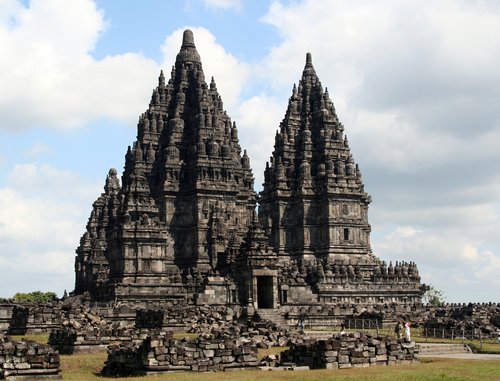
Indonesia - Ancient Hindu Temple found

A daily news summary for news media, educators, researchers, writers and religious leaders worldwide.


 Indonesian Ancient Hindu Temple

Statue Of Lord Shiva’s Mount Found At Ancient Hindu Temple In Indonesia

January 9th, 2010 Source: www.sindhtoday.net
JAKARTA, INDONESIA, January 7, 2010: Archaeologists have found a statue of Nandi, the sacred bull that carried the Hindu God Shiva, among the ruins of what is believed to be an ancient temple at an excavation site in Yogyakarta in Indonesia. Previous discoveries at the site, which is located on the Indonesian Islamic University campus, include a statue of Ganesha, and a Shiva Linga and yoni.

“The statue is exquisite. The sculpture is carved differently from other statues of Nandi. This one is not depicted as fat,” Indung Panca Putra, head of the excavation team said.

“We strongly believe the temple had a roof and its pillars were made of wood or bamboo,” Indung said. He said that archeologists were working under the assumption that the pillars had not been destroyed by a volcanic mudflow hundreds of years ago, but had instead been removed by people.

Indung said that the temple ruins were different from other temples found in Central Java. “We have compared what we have found to what was found in the temples of Sambisari, Gebang and Kedulan. The comparisons have led us to believe that the material used for the temple and its statues were much harder and the sculptures are far more refined,” Indung said.

Featured Temple: Paris’ Sri Manicka Vinayaka Alayam


Paris’ Sri Manicka Vinayaka Alayam

A daily news summary for news media, educators, researchers, writers and religious leaders worldwide.

Featured Temple: Paris’ Sri Manicka Vinayaka Alayam

January 9th, 2010 Source: www.youtube.com
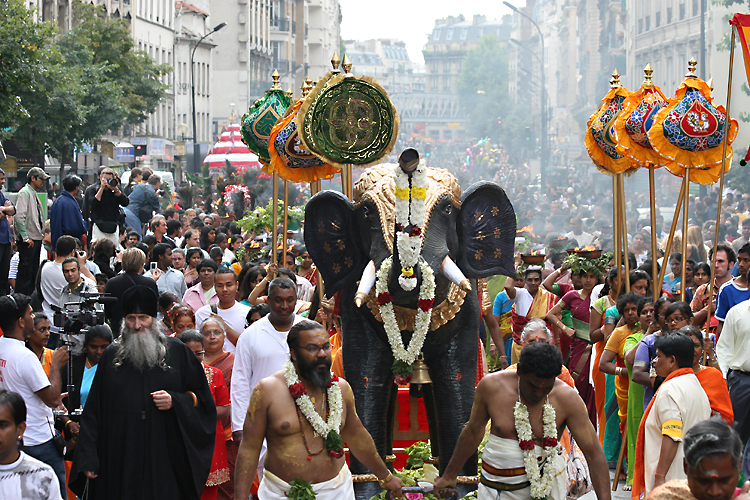
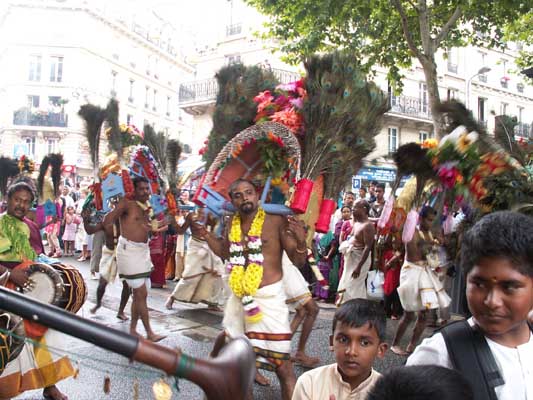
PARIS, FRANCE, January 2010: Established in 1985 in the cramped quarters of a former restaurant kitchen; the Sri Manicka Vinayaka Alayam is the most well known of more than one dozen Hindu temples in France. This temple sponsors the annual “Fete de Ganesh” parade through the streets of Paris at Ganesha Chaturthi time.

To view a well done 5-minute video by Lisa Salyer entitled: “Life at Ganesha Temple” posted to YouTube on May 15, 2009, click on source above.
Posted in Hindu Press Internationa

The Hindu American Foundation has challenged the interpretation of the ancient Hindu epics, the Ramayana and Mahabharata, by Professor Wendy Doniger


Ramayan


Mahabharat

A daily news summary for news media, educators, researchers, writers and religious leaders worldwide.

 The Hindu American Foundation

A Professor With a Taste for Controversy, At the Expense of Truth

January 9th, 2010 Source: www.hafsite.org

CHICAGO, U.S.A. November 19, 2009: The Hindu American Foundation has challenged the interpretation of the ancient Hindu epics, the Ramayana and Mahabharata, by Professor Wendy Doniger, Professor of Religion at the University of Chicago, in her most recent book called ‘The Hindu: An Alternative History’. As an academic and apparent non-believer, Professor Doniger, according to the foundation has completed her analysis from a Freudian psychoanalytical perspective with little or no regard or respect for the esoteric deeper meanings entrenched in the Hindu Faith.

The Hindu Foundation also points out that Hindus have become complacent in defending their faith as the Hindu community has chosen academic pursuits in the sciences and engineering. There are not enough Pundits, the philosophical and religious masters, to defend the Hindu community. As a result the portrayal of the Hindu faith has been reduced to caste, cows and curry, the foundation says.

Furthermore, the foundation points out that even modern humanistic psychology has questioned the Freudian approach to the interpretation of the human experience. Yet this Freudian approach was used by a prominent professor on religious scriptures. In conclusion, the foundation expounds, “Academic freedom should not be infringed upon and is sacrosanct. But academic legitimacy in the eyes of the public, outside of what is oft viewed as the incestuous academy, sets a much higher bar.”

Saturday, January 9, 2010

Book on the plight of Scheduled Caste Hindus in Pakistan (Old News)

Dear all,


PILER and TRDP in collaboration with Karachi Press Club are organizing a launching ceremony of a report
"Long behind Schedule" on the plight of Scheduled Caste Hindus in Pakistan

Speaker Sindh Assembly Mr. Nisar Ahmed Khuhro will launch the book.

Leading civil society activists, writers, researchers and intellectuals will share their views on the report. This is an open invitation for all.September 5th, 2008- Friday @ 5.PM @ Karachi Press Club

For further information please contact Zulfiqar Shah 0300 2119637 and Rafique
channa 0333 7598029

Here is Link

Plight of Scheduled Caste Hindus in Pakistan. By Mazhar Iqbal

 By Pakistan Christian Post (PCP)


We should rise above caste, sect and creed and only follow the objectives of democracy, Yousuf Raza Gilani, the prime minister of Pakistan said during a recent visit to Gilgit-Baltistan.

He was also quoted as saying “democracy gives assurance of freedom to practice any religion or sect.”

“Mohtarma Benazir Bhutto always issued party tickets to the members regardless of sectarian basis,” Gilani also said.

Pakistani politicians have always been vocal about giving fundamental rights to all segments of society. The first and foremost claim in this regard was made by none other than the founder of the nation. However, it is said that Jinnah was genuine in his concern for the low caste Hindus of Pakistan, but, things began to change after his death. Though, the ruling Pakistan Peoples Party has the largest vote bank of scheduled castes in Sindh, they are strangers in corridors of power in Karachi and Islamabad.

Approximately, more than three million Hindus live in Pakistan, of which about 2.5 million are from the scheduled castes.The most prominent among scheduled castes are Meghwals, Odhs, Valmikis, Kohlis and Bhels. Famous Mannu Bhel case, which was taken by much revered chief justice of Pakistan, was of Bhel community. Most of the scheduled castes live in districts Umerkot and Tharparkar in Sindh. Former Prime Minister Shaukat Aziz entered into political arena of Pakistan after winning the National Assembly seat from this constituency. Similarly, former chief minister Sindh Arbab Ghulam Rahim was also from this constituency.

There is also significant presence of scheduled caste Hindus in districts Bahawalpur and Rahim Yar Khan in Punjab.

Amazingly, the successive governments in Pakistan have never disclosed the exact number of scheduled caste population, which in itself is creating ambiguity about realistic figures. The Scheduled Castes Federation of Pakistan (SCFP), an organization representing the scheduled castes in the country, has recently demanded that their actual numbers should be reflected and represented in political and legislative arrangements. In a letter written to the Constitutional Reforms Committee of the Senate, this organization urged the government to conduct a census of Dalits, which were separate from upper caste Hindus, so that their precise number in the national population could be ascertained.

The term “scheduled castes” emerged in political and constitutional history of Pakistan on November 12, 1957, when the Ministry of Law issued a presidential ordinance to declare certain non-Muslim castes as “scheduled castes.” Accordingly, 40 castes were added to this schedule. The ordinance was called the Scheduled Castes (Declaration) Ordinance, 1957. It was declared that these scheduled castes would be given some special status in population welfare matters, e.g. allocation of reserved quota for them was assured. However, this quota was never implemented in letter and spirit till 1998, when this law was revoked in regrettable circumstances. Due to lack of constitutional protection, the scheduled castes’ representation in legislature, judiciary, government services and education has been miserable.

These scheduled caste communities are the majority in the minority but they are mostly neglected by the upper caste Hindus and feudal lords. According to any standard of living, they are the most deprived community. The reason is there is no room for them in political hierarchy of Pakistan. Though the ruling Pakistan Peoples Party has the largest vote bank in Sindh, most of the scheduled caste communities are deprived of basic human rights. According to unofficial estimates, around 75 per cent scheduled caste Hindus work as bonded labour. Most of these scheduled caste Hindus work as landless agricultural labourers and sweepers. A large number of their population work as tenants but some are also involved in the brick-kiln and leather works. They have been living in huts in rural areas of Sindh and Punjab since decades.

The Law and Justice Commission of Pakistan has announced that 2009 would be the year of focus on justice at grassroots levels. The much-trumpeted judicial activism in Pakistan may prove a gust of fresh wind for these poor classes. In rural areas their huts are located in separate settlements outside the main village and they generally lack even basic amenities. They also live nomadic life, traveling from village to village in search of manual work. Many live in temporary structures in the land of landlords.

Land mafias in rural Sindh and Punjab often forcibly grab the land on which scheduled castes set up their huts. In most places scheduled castes have no temples of their own. They have few places where they can burn their dead, and many of these are illegally occupied by local feudals. Majority of scheduled caste Hindus do not send their girls to school fearing that they might be kidnapped raped. Most of the scheduled castes do not possess national identity cards, the important document, which could give some realistic figures about their status.

In 2002, of the nine seats reserved for the Sindh provincial assembly for religious minorities, seven were for Hindus and only one for scheduled castes. According to unofficial reports Dalits, like other minorities in Pakistan are also victims of religious discrimination, by both Muslims as well as 'upper' caste Hindus. Despite the Hindus being minorities in Pakistan, ‘upper’ caste Hindus continue to discriminate against the Dalits.Generally, these communities are refused entry into Hindu temples belonging to the 'upper' castes. There is a growing need for the establishment of a national commission in Pakistan to monitor the conditions of the scheduled castes.


(The writer is a Karachi based Journalist. He is associated with Press For Peace (PFP) as Researcher. He could be reached at: mazharimazhar@gmail.com )

Friday, January 8, 2010

Introduction to Hinduism Today Magazine/Kauai's Hindu Monastery

Hinduism Today


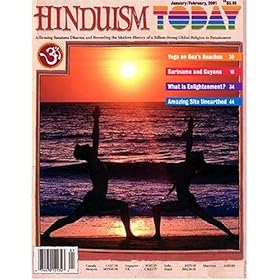
Hinduism Today Magazine is an international journal affirming the Sanatana Dharma and recording the history of a billion strong global religion in renaissance.

Hinduism Today Magazine, published quarterly from Kauai's Hindu Monastery, is the foremost global journal on Hinduism.


Hinduism Today

Kauai's Hindu Monastery

Kauai's Hindu Monastery, founded in 1970 by Satguru Sivaya Subramuniyaswami (left, 1927-2001), is under the spiritual direction of his successor, Satguru Bodhinatha Veylanswami (right). It is part of the Saiva Siddhanta Church, founded in Sri Lanka in 1949. Its spiritual heritage derives from the Nandinatha Sampradaya, which goes back to 2,200 bce. 


A Hindu monastery-temple complex in Hawaii of the Tamil Saivite tradition, home to two dozen monks, pilgrimage destination for sincere devotees world wide.


What Is Hinduism?


 Kauai's Hindu Monastery

The glories of Bhagavad-gita

Bhagavad-gita

 
The Glories of Eleventh Chapter of the
Bhagavad Gita from the Padma Purana


Srimad Bhagavad-gita-mahatmyam
THE GLORY OF SRIMAD BHAGAVAD GITA


The Glories of Chapter Eight of the
Bhagavad Gita from the Padma Purana


This is a great story

The glories of Bhagavad-gita - from Gita-Mahatmya of Padma Purana
This Bhagavad-gita is the destroyer of all sins. And that intelligent man who daily recites one chapter or even one sloka, one half sloka, or at least one quarter sloka, will attain the same position as Susharma had attained.”
Lakshmi inquired, “Who was Susharma? What class did he belong to? And what destination did he attain?”
Lord Vishnu said, “My dear Lakshmi, Susharma was a very wicked and a most sinful man. Although he was born in a brahmana family, his family had no Vedic knowledge. And he only took pleasure from hurting others. He never engaged in the chanting of, My names, in giving charity, or receiving guests. In fact, he never performed any pious activities. For his livelihood he collected leaves, and sold them in the bazaar. He especially enjoyed drinking wine, and eating flesh. In this way he passed his life.

“One day that foolish Susharma had gone to the garden of one sage for collecting leaves, when a snake came and bit him, and he died. After his death he was cast into many hells, where he suffered for a long time. After which he attained the body of a bull. That bull was purchased by a crippled man, who engaged him in his service. For about seven or eight years he was carrying extremely heavy loads. One day that crippled man had piled a very heavy load onto the back of his bull. Very quickly he was forcing that bull along when suddenly the bull fell over and became unconscious. Many persons gathered there, to see what was happening, feeling sorry for that bull. One pious man bestowed upon that bull the results of some of his pious activities. Seeing that, other persons standing there started remembering their pious activities, and offered the results of some of those activities to that bull. In that crowd there was also one prostitute who did not know if she had ever performed any pious activities, but seeing everyone else offering their pious credits to that bull, she also offered the results of any pious activities she might have performed After that, the bull died, and was taken to the abode of Yamaraja, the God of Death.


There, Yamaraja informed him, “You are now free from the reactions of all your previous sinful deeds, due to the pious credits given to you by that prostitute.” Then he took birth in a very high brahmana family. In that birth, he was able to remember his past lives. After many days, he decided to search out that prostitute, who had been the cause of freeing him from his hellish situation.

After he had found and introduced himself to that lady he inquired from her - “What were the pious activities performed by you, the fruits of which freed me from my hellish situation?” The prostitute replied to him, “My dear sir, in that cage is one parrot, which recites something everyday. Hearing that recitation, my heart has become completely pure. The results of hearing that recitation I had given to you.” Thereafter they both inquired from that parrot about that recitation. That parrot. remembering his previous life, started to narrate his history. “Previously, I had been a very learned brahmana. But due to my pride, I used to insult other learned persons. I was also extremely jealous. After I died, I was cast into many hells, and after a long time of suffering, I achieved this body of a parrot. Due to my past sinful activities, my mother and father died while I was a baby. One day, while I was lying on the hot sands, with no protection, some rishis saw me, and took me to their ashram, and put me in a cage. At that same place, the children of those rishis were learning the recitation of the First Chapter of the Srimad Bhagavad-gita, Hearing them repeat those slokas, I also. started repeating those slokas along with them.

“Shortly after, one thief stole me from that place and sold me to this pious lady.” Lord Vishnu continued, “By reciting the First Chapter of the Bhagavad-gita, that parrot had become completely pure. And by hearing that recitation, that prostitute also became completely pure. And by receiving some of the pious results of hearing that recitation, Susharma also become completely pure. After discussing for some time the glories of the first chapter of Bhagavad-gita, Susharma returned to his home, and the three of them individually engaged in reciting the First Chapter of Srimad Bhagavad-gita, and very quickly attained the supreme destination, Vaikuntha.” Anyone who recites, who hears, or studies the First Chapter of Bhagavad-gita, will very easily cross over the ocean of material miseries, and attain the service of the lotus-feet of Lord Krishna. From Gita-Mahatmya of Padma Purana 
Link Me 

The Lord appears in ways to capture His devotees


“O my Lord, Your devotees can see You through the ears by the process of bona fide hearing, and thus their hearts become cleansed, and You take Your seat there. You are so merciful to Your devotees that You manifest Yourself in the particular eternal form of transcendence in which they always think of You.” (Srimad Bhagavatam 3:9:11.)

PURPORT:
The statement here that the Lord manifests Himself before the devotee in the form in which the devotee likes to worship Him indicates that the Lord becomes subordinate to the desire of the devotee—so much so that He manifests His particular form as the devotee demands. This demand of the devotee is satisfied by the Lord because He is pliable in terms of the transcendental loving service of the devotee. This is also confirmed in Bhagavad-gitä (4.11): ye yathä mäm prapadyante täms tathaiva bhajämy aham. We should note, however, that the Lord is never the order supplier of the devotee. Here in this verse it is particularly mentioned: tvam bhakti-yoga-paribhävita. This indicates the efficiency achieved through execution of matured devotional service, or premä, love of Godhead. This state of premä is achieved by the gradual process of development from faith to love. On faith one associates with bona fide devotees, and by such association one can become engaged in bona fide devotional service, which includes proper initiation and the execution of the primary devotional duties prescribed in the revealed scriptures. This is clearly indicated herein by the word shrutekshita. The shrutekshita path is to hear from bona fide devotees who are conversant with Vedic wisdom, free from mundane sentiment. By this bona fide hearing process, the neophyte devotee becomes cleansed of all material rubbish, and thus he becomes attached to one of the many transcendental forms of the Lord, as described in the Vedas.

This attachment of the devotee to a particular form of the Lord is due to natural inclination. Each and every living entity is originally attached to a particular type of transcendental service because he is eternally the servitor of the Lord. Lord Chaitanya says that the living entity is eternally a servitor of the Supreme Personality of Godhead, Shri Krishna. Therefore, every living entity has a particular type of service relationship with the Lord, eternally. This particular attachment is invoked by practice of regulative devotional service to the Lord, and thus the devotee becomes attached to the eternal form of the Lord, exactly like one who is already eternally attached. This attachment for a particular form of the Lord is called svarüpa-siddhi. The Lord sits on the lotus heart of the devotee in the eternal form the pure devotee desires, and thus the Lord does not part from the devotee, as confirmed in the previous verse. The Lord, however, does not disclose Himself to a casual or unauthentic worshiper to be exploited. This is confirmed in Bhagavad-gitä (7.25): näham prakäshah sarvasya yoga-mäyä-samävritah. Rather, by yoga-mäyä, the Lord remains concealed to the nondevotees or casual devotees who are serving their sense gratification. The Lord is never visible to the pseudodevotees who worship the demigods in charge of universal affairs. The conclusion is that the Lord cannot become the order supplier of a pseudodevotee, but He is always prepared to respond to the desires of a pure, unconditional devotee, who is free from all tinges of material infection. (Srila A.C.Bhaktivedanta Swami Prabhupada. Srimad Bhagavatam 3:9:11. purport)

What is Kumbha Mela?

By Hinduism Today


Description:

Cosmic Alignment and Divine Presence Empower Humanity’s Grandest Religious Observance

The tens of millions of hindus who came to the Kumbha Mela at Haridwar this year were nearly all of modest means. After days of travel, many spent a mere 24 hours in the holy city at the gateway to the Himalayas. They chanted Jai Ganga Ma—“Hail Mother Ganga”—took their sacred bath in the frigid river, collected a pot of holy Ganga water and then headed home.


Thursday, January 7, 2010

Is “Vasudhaiva Kutumbkam” ?


Vasudhaiva Kutumbakam (from "vasudha", the earth; "eva" = emphasizer and "kutumbakam", "family") is a Sanskrit phrase that means that the whole world is one single family.
The theory originates in ancient Indian texts of India called the Upanishads and is considered an integral part of the Hindu Philosophy.


“Vasudhaiva Kutumbkam” which translates though we are living apart we are inter-connected with each other. "Vasudhaiva" means "the entire earth' and 'Kutumbkam' means the "family.'Vasudhaiva Kutumbkam' literally means “The World is one family”. Recently, genetic studies have proved that we humans are all members of one closely related family with a common genetic ancestor.


The cosmos is one family (vasudhaiva kutumbakam) Vedic concept or Mantra of Hindu humanism.


Similar concepts

Vasudhaiva Kutumbakam could be considered as an equivalent to the concept of global village, a theory presented by Marshall McLuhan. It has also seen to be similar to the ancient African concepts like Ubuntu.


Influences

Dr N Radhakrishnan, former director of the Gandhi Smriti and Darshan Samiti, believes that the Gandhian vision of holistic development and respect for all forms of life; nonviolent conflict resolution embedded in the acceptance of nonviolence both as a creed and strategy; were an extension of the ancient Indian concept of Vasudhaiva Kutumbakam.


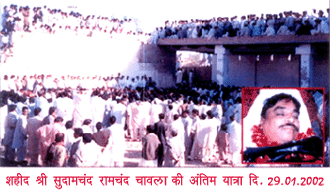
Pakistani Hindu Community is still waiting for Justice ? (Tribute to the Great Hero Late Shri Sudhamchand R. Chawla)


Sudham Chand Chawla


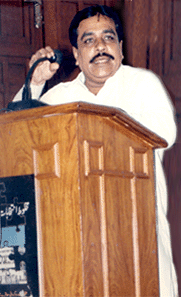
My Self Sudhamchand R. Chawla. I was borne in Haji city of Bluchastan state. I had come in Jacobabad of Sindh State in 1968 from Haji city. There I was admitted in Hamidiya High school where I found good unity among Hindu & Muslim people. We Hindu & Muslim participated in many social work together. It was that time when Zulf Ali Bhutto was the PM of Pakistan. He inspired us for save to the people, Hindu-Muslim unity. In this way I inspired form Bhutto and participated together with all students in Sindh Piples Students Federation. I was elected as president of this Federation and we did many socially desirable work.

When govt. order to hang the Bhutto till the death. "Bhutto Bachav" moment get started and we excitingly participated in it. Govt. arrested many people during this moment and I was one of them. At last that black day came when Bhutto hanged till the death. Then General Zia was the PM of Pakistan who was Chief Air marshal. He passed an ordinance to start separate electorates system for Hindu minorities instead of point election. I decided that time, I will start the moment to protest against this ordinance. But due to Millitary regime in Pakistan, it was not possible to protest against the ordinance of Zia. We continued our Social work. Then I was appointed as a member of Municipal Corporation for two time. During my membership period I was served to the Hindu class people I said to my Hindu class people "Why shouldn't we protest against being treated as fourth class citizens? Under the electorates system in Pakistan. Minorities including Hindus have a separate electorates. At that time all major decision of the Hindu class people were taken by Jakhrani Sardar. He illegally forced to Hindu people to act accordingly to his decision He was history sheeted criminal according to the police record. At last we succeed in our moment to awake the people from Jakhranis crime and first time Hindu class people appointed me as a president in Hindu Panchayat Hall. During my president ship. I emphasized on unity of Hindu & Muslim people. I served to Hindu class people

In 1997,Mohamed Jakhrani's sons and some Hindus who were his worker, fought with my sons and looted my oilshop,of which I have registered an FIR(FIR.no.53/97) in the City Police Station.That time Baqa Mohamad son's were arrested but they were jailed only for 10-12 days.

Then I had decided to start moment against ordinance of General Zia. In Gotki districts meeting was called by Panchayat of Bluchastan Sindh and other states, where MRJ moment was made against the ordinance. In this meeting they elected me as a convener of the moment. Then offer we had called a big meeting in Jacobabad where reporter of BBC London and other reporter had called to get coverage of the meeting. In the meeting if was decided to boycott the local council electron.

Every Panchayat encouraged the men and women of hindu community to join the moment and they actively participated in hunger strike. This way in Pakistan's history for the first time, women in large number were on hunger strike in Jacobabad city. BBC news channel has specially sent its editor for this event coverage and rest of news reporters also joined the same.Panchayati hunger strike meeting held in many different cities and govt.elections were strongly boycotted. Leaving entire hindu community and christian seats,all seats were empty. Barring these seats, Govt.did elections on rest of the seats. In that election, deputy district Nazim Ajaz Jakhrani and Town Nazim Jakhrani were elected in Jacobabad local govt.Soon after, they used to threaten me.They are interfering in the affairs of Hindu Genral Panchayat. Aijaz Jakharani Deputy District Nazim and Mumtaz Jakhrani Taluka Nazim of Jacobabd here got old enmity with me, they got robbed my shop in the year 1997 and such FIR was registered with the police, they now want to take revenge from me. Both Aijaz & Mumtaz Jakhrani now press me that I should tender resignation from the presidentship of Hindu Genral Panchayat Jacobabad. They intend that after my resignation I may be murdered. I am ready to make election of Hindu Genral Panchayat 99% people belonging to minority community are with me & they are fulfill with me. I am requesting to Sindh Government, Human rights, Cor. Commander, Sindh & others that to send your team or representatives to Jacobabad, in order to see my majorities & to see the interference of Jakhranies in the affairs of the Hindu Genral Panchayat. I am further requested to district administration be asked to stop interference of Jakhranies in the affairs of Hindu Genral Panchayat because they have got no concern with we minority people.

Kandh,Kot,Thul and Kahmore panchayat intervened, talked with DPO and decided to do re-election for Hindu Panchayat President ship. Election committee members were selected from Thul, Khand, Kot and Kashmore panchayat and they were given responsibility for the fair election.Jakhrani stood Dr.Hari Dass aginst me in the elections.Pressurised hindus for the win of Dr.Hari Dass. But I had a strong faith that Hindus will vote seeing my work and devotion towards them. After all elections took place and I got elected with 75% votes. After some time joint election's efforts bore fruit and Mussharraf govt cancelled the ordinance of General Zia and announced joint election. We celebrated this with zeal and joy and also appealed hindu community to register their names in the voter list. Unfortunately one day, Jakhrani killed me. But he didn't knew that from live Sudham Chand to dead Sudham Chand will bring him to the noose of death.


 Fact-finding into murder of Sudham Chand Chawla :
.

February: Jacobabad: Fact-finding into murder of Sudham Chand Chawla. The noted minority leader and president Hindu Panchayat, Jacobabad, Sudham Chand Chawla, who mobilised a boycott of past elections to demand a joint electorate was murdered in the busy bazar of Jacobabad, city on January 28. Chawla was also a member of HRCP. His brother lodged an FIR nominating deputy district nazim Aijaz Jakhrani and others including a former MNA Babul Kakhrani. Police failed to arrest culprits who later on obtained bail from the court. The complainant and his family now fear for their lives. Mr. Ali Hasan, Vice Chairperson, Sindh went to Jacobabad to meet the aggrieved family and the members of the community.
 

Press Release on Sudham Chand Chawla :
.
Press Release (June 27, 2006)
information by Hindu Students Council

It is to the credit of the peaceful Hindus that they have never taken to armed resistance, not even once. However, any sign of peaceful Hindu protest is brutally crushed by the Islamic regime. Their most prominent leader, Sudham Chand Chawla, regarded as the Mahatma Gandhi for the Hindus in Pakistan, was killed by government death squads on January 28, 2002. Chawla's only crime was he waged a peaceful struggle to restore usurped land belonging to the Hindus and for pursuing a successful legal battle against the government to restore equal voting rights to the Hindu minority. The separate electorate system which had been in effect since 1984 subjected the people of Pakistan to an electoral system which discriminates on the basis of religion. This system denied religious minorities their right of universal adult franchise.

Pak Hindu leader wins ballot battle, falls to bullet


Author: Vivek Deshpande
Publication: The Indian Express
Date: February 1, 2002

A Prominent leader of the Pakistani Hindu community, Sudham Chand Chawla, who successfully fought a legal battle to ensure voting rights for Pakistani minorities, was shot dead by unidentified assailants in the Pakistani city of Jacobabad on Monday. This was revealed by relatives of the slain leader to mediapersons here.Pakistani newspapers such as The News and The Dawn carried the news of the killing which largely went unnoticed in India. A pall of gloom descended on the Chawla residence here when his relatives heard it on BBC Radio the same night. According to his brother Jagdish, who resides here along with three other brothers, Chawla was scheduled to meet the Jacobabad collector in connection with the electoral rolls when he was shot dead.

the Pakistan Supreme Court had restored voting rights to minorities a fortnight ago following Chawla's sustained efforts. "Some Muslim organisations, too, helped him in his endeavour but the fundamentalists probably didn' like it and hence killed him," he said. Chawla, 45, was president of the Hindu General Panchayat and the Jacobabad district chief of Pakistan People's Party (PPP). He was one of the prominent Hindu leaders and was popular among Muslims too. gathered at his residence and Jacobabad observed an impromptu bandh when the news of his death spread.

Hindus staged a highway blockade which was eased after the administration promised to nab the culprits. "Sindh traders observed a three-day bandh to protest the killing," Chawla's son Santosh said. Sudham Chand, who owned a rice mill, is survived by his widow, a son and a six-month-old daughter in Pakistan and three sons, Santosh, Manoj and Inder who moved to Nagpur a few years ago. One of his brothers Kanwarlal is in Jacobabad while four brothers, Jagdish, Ashok, Kishor and Daulat, had left Pakistan 25 years ago to settle down in Nagpur. Sudham Chand was the eldest. His mother,too, is here for the past one year while his father is dead.

According to family members here, Chawla had loved the Pakistan SC three years ago seeking restoration of voting rights to minorities. "He was helped by people such as former speaker of Pakistan's National Assembly Elahi Bukhsh Soomro," Jagdish said. "He also valiantly fought for restoration of land which rightfully belonged to the Hindus," he said. Sudham Chand was elected a corporator in Jacobabad first in 1983 and then in 1987. In 1990, he bacame president of the Jacobabad PPP and in 1994 became its district chief. In 1996, during Benazir Bhutto's reign, he was named the chief of Upper Sindh unit of the PPP, according to family members. "His killing has created a feeling of insecurity among Pakistan Hindus and the Government of India should do something about it," Jagdish said.


Our Aim
.

It is not fair with me that my brother has being murdered in the busy bazaar. His crime was that he made the free to the Hindu community from the crime of Jakhrani Family so that they can freely take their decision and live happily without under anybody's pressure. His crime was that he fought for the joint election for the betterment of Hindu community, he fought against the separate electorates system of Pakistan, he fought for the humanity of the society, he fought against the unfair treatment which had been giving to the Hindu community. Sudham Chand Chawla wished to equal voting rights and joint electorates system in Pakistan for the betterment of Hindu people. My brother was the great Hindu leader. But now I want justice because it is not only my demand but also entire Hindu community demand. Now, more than 6 years had been passed but Pakistan government did nothing for the Sudham Chand Chawla's case. I am requesting to Pakistan government to conduct a fair enquiry in this case not for me or single person but also for humanity.

I wish to take help of Indian government along with the Pakistan government. So I request to Pakistan government to conduct international inquiries in which it should take the help of Crime Branch of India for my brother's case. At last I want that culprits must get arrested soon and strictly punish them for their crime. So my humble request to those who are reading about this great man Sudham Chand Chawla, that please contribute your little efforts for getting me justice so that humanity may remain alive and again such a crime must not happen with another Hindu leader in future.


Please support,share this info and Contact us
.


info@sudhamchandchawla.com
.
www.sudhamchandchawla.com

Tuesday, January 5, 2010

Hinduism in Vietnam ???

Hindu temples IN VIETNAM
The Editor, Aum Muruga Journal


1. basic Facts on Vietnam

1.1 Geography

Vietnam stretches over 1600km along the eastern coast of Indo-China Peninsula. The country's land area is 326,797sq. km. This makes it slightly larger than Italy and a bit smaller than Japan. Vietnam has 3451km of coastline and 3818km of land borders: 1555km with Laos, 1281km with China and 982km with Cambodia. Three-quarters of the country consist of mountains and hills, the highest of which is 3143m high Fansipan in the Hoang Lien Mountains in the far north-west. The Truong Son Mountains, which form the Central Highlands, run almost the full length of Vietnam along its border with Laos and Cambodia. The largest metropolis is Ho Chi Minh City (Saigon) followed by Hanoi (capital) Haiphong and Danang

1.2 Climate

Vietnam has a remarkable diverse climate because of its wide range of latitudes and altitude. Although the entire country lies in the tropics and subtropics, local conditions vary from frosty winter in the far northern hills to year-round, sub-equatorial warmth in the Mekong Delta. In Ho Chi Minh City, the average annual temperature is 27oC. In April, daily highs are usually in the low 30s. In January, the daily lows average 21oC. Average humidity is 80% and annual rainfall averages 1979mm.

1.3 Population and People

In 1997, Vietnam's population reached 76.5 million, making it the 13th populous country in the world. Eight-four percent of the population is ethnic-Vietnamese, 2% is ethnic-Chinese and the rest is made up of over 50 ethno-linguistic groups.

Evidences indicate that in Saigon (presently Ho Chi Minh City) the Indian population, mainly from South India was of a significant number in the past. Almost all of South Vietnam's Indian population, most of whose roots were in southern India, left 1975 after reunification. The remaining community in Ho Chi Minh City worships at the Mariamman Hindu Temple and the Central Mosque. (Within the last few years, the many Indians are coming back for business purposes).

Vietnam population is very well educated. Vietnam's literacy rate was estimated at 82%, although official figures put it even higher at 95%. Four great philosophies and religions have shaped the spiritual life of the Vietnamese people: Confucianism, Taoism, Buddhism and Christianity.

1.4 Tamils in Vietnam

A tiny and almost forgotten minority group are the Tamils, whose ancestors came from tiny French enclaves like Pondicherry and Karikal along the south coast of India. Their small community in Ho Chi Minh City, now only a few thousand. In the late 19th century the Tamil immigrants from the French colonies of South India erected the Mariamman Temple in Saigon.

Like small ethnic groups anywhere in the world, the minority peoples of Vietnam continue to struggle against absorption into mainstream society. Meager economic opportunities in the countryside have drawn many minority people to urban areas where they must adopt to the ways of the late 20th century. But, another force is also at work. Since the early 1960s, the communist regime in Hanoi has endeavoured to integrate minority groups into the dominant Viet population. However, parents continue to teach native minority traditions at home as many of Vietnam’s ethnic groups reach the verge of extinction.

1.5 Cultural Practice: Ancestor Worship

Vietnamese ancestor worship based on the belief that the soul lives on after death and becomes the protector of its descendants. Because of the influence of the spirits of one's ancestors exert on the living, it is not only shameful for them to be upset or restless, but downright dangerous. A soul with no descendants is doomed to eternal wandering because it will not receive homage.

Traditionally, the Vietnamese venerate and honour the spirits of their ancestors regularly, especially on the anniversary of the death, when sacrifices offered to both the god of the household and the spirit of the ancestors. To request intercession for success in business or on behalf of a sick child, sacrifices and prayers are offered to the ancestor spirits. The ancestors are informed on occasions of family joy or sorrow, such as weddings, success of examination or death.

Three major religious festivals are celebrated to remember the dead. The first is the Holiday of the Dead (Thanh Minh). This falls in the fifth day of the third moon. In this day, people pay solemn visits to graves of deceased relatives, specially tidied up a few days before, and makes offerings of food, flowers, joss sticks and votive papers. The second is the Summer Solstice Day (Doan Ngu). This falls on the fifth day of the fifth moon. On this day, offerings are made to spirits, ghosts and the God of Death's ward off epidemics. Human effigies are burned to satisfy the requirements of the God of Death for souls to staff his army. The third festival is the Wandering Souls Day (Trung Nguyen). This falls on the fifteenth day of the seventh moon. This is the second largest Vietnamese festival of the year. Offerings of food and gifts are made in homes and pagodas for the wandering souls of the forgotten dead.

2. Pre-history of Vietnam

From the 1st to 6th centuries AD, Vietnam was part of the Indianised kingdom of Funan, which produced notably refined art and architecture. The Funanese constructed an elaborate system of canals which were used for both transportation and the irrigation of wet rice agriculture. In mid-6th century, Funan was attacked by the pre-Angkorian Kingdom of Chenla, which gradually absorbed the territory of Funana into its own.

The Hindu kingdom of Champa appeared around present-day Danang in the late 2nd century. Like Funan, it became Indianised by lively commercial relations with India and through the immigration of Indian literati and priests. Brilliant examples of Cham sculpture can be seen in the Cham Museum in Danang.

During the Chinese rule from 200 BC to 938 AD, Vietnam was a key port of call on the sea route between China and India. The Vietnamese were introduced to Confucianism and Taoism by Chinese scholars who came to Vietnam as administrators and refugees. Indians sailing eastward brought Theravada (Hiayana) Buddhism to the Red River Delta while, Chinese travellers introduced Mahayana Buddhism. Buddhist monks carried with them the scientific and medical knowledge of the civilisations of India and China; as a result, Vietnamese Buddhists soon counted among their own great doctors, botanists and scholars.

2.1 Kingdom of Champa

The kingdom of Champa flourished from the 2nd to the 15th centuries. It first appeared around present-day Danang and later by 8th century spread south to what is now Nha Trang and Phan Rang. The Cham adopted Hinduism, employed Sanskrit as a sacred language and borrowed heavily from Indian art. One of the most stunning sights in Hoi An area is My Son, Vietnam's most important Cham site. During the centuries when Tra Kieu (then known as Simhapura) served as the political capital of Champa. Dong Dong (then known as Indrapura) served as the Cham's religious centre.

My Son was the site of the most important Cham intellectual and religious centre, and also may have served as a burial place for Cham monarchs. My Son is considered to be Champa's counterpart to the grand cities of south-east Asia's other Indian-influenced civilsations: Agkor (Cambodia), Bagan (Myanmar), Aythaya (Thailand) and Borobudur (Java).

My Son became a religious centre under King Bhadravarman in the late 4th century and was occupied until 13th century. Most temples were dedicated to Cham kings associated with divinities, especially Shiva, who was regarded as the founder and protector of Champa's dynasties. The main sanctuary was dedicated to Bhadresvara, which is a contraction of the name of King Bhadravarman, who built the first temple at My Son, combined with '-esvara', which means Siva.

The linga inside was discovered during excavations in 1985. The 8th century was used to worship Shiva portrayed in human form rather than in the form of linga. Inside is an altar where a statue of Shiva, now in the Cham Museum in Danang used to stand. In the Museum, the objects displayed include a large panel of Shiva dancing on a platform above the bull Nandi. To Shiva's left is his son Skanda (under a tree), his wife Uma and a worshipper. To Shiva's right is a dancing saint and two musicians under a tree, one with two drums, the other with a flute. The display also include a finely carved lion - symbol of the power of the king (the lion was believed to be an incarnation of Vishnu and the protector of kings).

2.2 Hinduism in Early Vietnam

Champa was profoundly influenced by Hinduism and many of the Cham towers, built as Hindu sanctuaries, containing lingas that are still worshipped by ethnic-Vietnamese and ethnic-Chinese alike. After the fall of Champa in the 15th century, most Chams who remained in Vietnam became Muslims, but continued to practice various Brahmic rituals and customs.

2.3 Hindu Gods found in Cham Museum

Cham Museum is founded in 1915 by the Ecole Francaise d'Esreme Orient. It has the open-air collection of Cham sculptures in the finest in the world. Many of the sandstone carvings (altars, lingas, garudas, ganeshas, saraswathy, sea monster makara, elephant-lion Gajasimha, and images of Shiva, Brahma and Vishnu) and altar ornaments are breathtaking; making this a place you can visit again and again.

The four scenes carved around the base of the 7th century Tra Kieu Altar tell part of the Ramayana epic and are influenced by the Amaravati style of South India:

Scene A (16 characters) tells the story of Prince Rama, who broke the sacred bow (Rudra) at the citadel of Videha thus winning the right to wed King Janaka's daughter, Princess Sita.

Scene B (16 characters) shows the ambassadors sent by King Janaka to Prince Rama's father, King Dasaratha, at Ayodhya. The emissaries inform King Dasaratha of the exploits of his sons, present him with gifts and invite to Videha to celebrate his son's wedding.

Scene C (18 characters) shows the royal wedding ceremony (including three Prince Rama's brothers, who are marrying Princess Sita's cousins).

In Scene D, 11 apsaras (heavenly maidens) dance and present flowers to the newlyweds under the guidance of the two gandhara musicians who appear to the beginning of Scene A.

2.4 Hindu Gods in Po Klong Gari Cham Towers

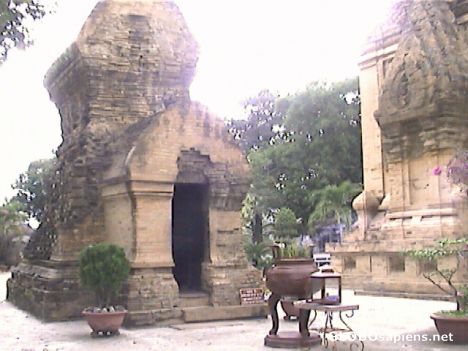
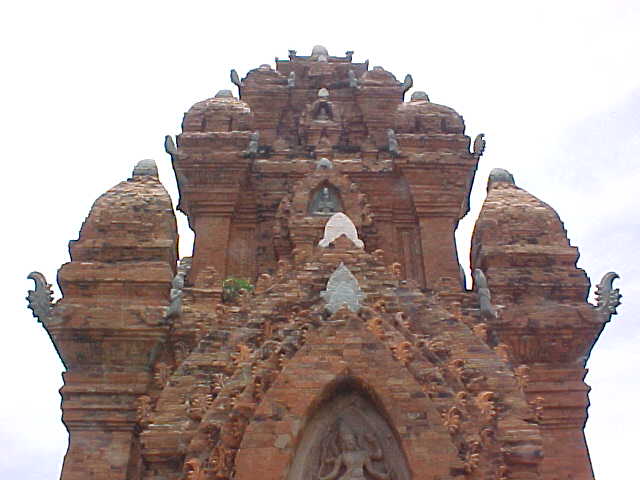
Phan Rang-Thao Cham's famous landmark is Po Klong Garai, also known as Po Klong Girai (girai means dragon). The four brick towers, constructed at the end of the 13th century during the reign of Cham monarch Jaya Simhabarman III, were bult as Hindu temples and stand on a brick platform at the top of Cho''k Hala, a crumbling granite hill covered with some of the most ornery cacti this side of the Rio Grande.

Over the entrance to the largest tower (the kalan, or sanctuary) is a carving of a dancing Shiva with six arms. This bas-relief is known locally as Po Klaun Tri - The Guardian of the Temple-Tower - and is famous for its beauty. Inside the vestibule is a statue of the bull Nandi (also known as Kapil Ox), symbol of the agricultural productivity of the countryside. Under the main tower is a mukhu-linga, a linga with a painted human face on it. A wooden pyramid has been constructed above the mukha-linga. On the nearby hill is a rock with an inscription from the year 1050 commemorating the erection of a linga by a Cham prince.

The Kate New Year is celebrated at the towers in the seventh month of the Cham calender (around October). The festival commemorates ancestors, Cham national heros and Gods such as goddess Po Ino Nagar who assisted the Chams with their farming. On the eve of the festival, a procession guarded by the mountain people of Tay Nguyen carries King Po Kloong Garai's clothing to accompaniment of traditional music. The procession lasts until mid-night. The following morning the garments are carried to the tower., once again accompanied by music along with banners, flags, singing and dancing,. Notables, dignitaries and village elders follow behind. This colourful ceremony continues into the afternoon. The Cham's New Year celebrations then carry on for the rest of the month as they attend parties and visit friend and relatives. The Cham also use this time to pray for good fortune.

2.5 Hindu Gods in Po Nagar Cham Tower

The Cham towers of Po Nagar, also known as Thap Ba (the Lady of the City), were built between the 7th and 12th centuries. The site was used for Hindu worship as early as 2nd century AD. Today, both ethnic-Chinese and ethnic-Buddhists come to Po Nagar to pray and make offering according to their respective traditions.

There are many stone slabs found throughout the complexes, most of which relate history or religion proving great insight into the spiritual life and social structure of the Chams. Originally the complex covered an area of 500 sq. m. and there were seven or eight towers, four of which remain. All the temples face east, as did the original entrance to the complex, which is to the right as you ascend the hillock. In centuries past, a person coming to pray passed through the pillared mandapa (meditation hall), 10 pillars of which can still be seen, before proceeding up the staircase to the towers.

The 23m high North Tower (Thap Chinh), with its terraced pyramidal roof, vaulted interior masonry and vestibule, is a superb example of Cham architecture. One of the tallest Cham towers, it was built in 817 AD by Pangra, a minister of King Harivarman I, after the original temples here were sacked and burned. the raiders also carried off a linga made of precious metal. In 918 AD King Indravaraman III placed a gold mukha-linga in the North Tower, but it too was taken, this time by the Khmers. This attern of statues being destroyed or stolen and then replaced continued for some time until 965 AD when King Jaya Indravarman I replaced the gold mukha-linga with a stone figure of Uma - a shakti, or feminine manifestation of Shiva - which remains to this day.

Above the entrance to the North Tower, two musicians flak a dancing four-armed Shiva, one of whose feet on the head of the bull Nandi. The sandstone door-posts covered with inscriptions, are parts of the walls of the vestibule. A gong and a drum stand under the pyramid-shaped ceiling of the antechamber. In the 28m high pyramidal main chamber there is a black stone statue of the goddess Uma (in the shape of Bhagavati) with ten arms; two of which are hidden under her vest. She is seated leaning back against some sort of monstrous animal.

The Central Tower (Thap Nam) was built partly of recycled bricks in the 12th century on the site of a structure dating the 7th century. It is less finely constructed than the other towers and has little ornamentation; the pyramidal roof lacks terracing or pilasters. The interior altars were once covered with silver. There is a linga inside the main chamber.

The South Tower (Mieu Dong Nam), at one time dedicated to Shiva, still shelters a linga. The richly ornamented North-West Tower (Thap Tay Bac) was originally dedicated to Ganesha. The pyramid-shaped summit of the roof of the North-West Tower has disappeared. The West Tower, of which almost nothing remains, was constructed by King Vikrantavarman during the first half of the 9th century.

3. Muslims and Hindus in Vietnam

There are small groups of Muslims and Hindus in Vietnam. Most of them are Chams, one of the country’s largest ethnic groups, who are almost equally divided between the two. The vast majority of Chams live along the coastal plain between Nha Trang and Phan Thiet or in Ho Chi Minh City which has both a mosque and three Hindu temples. Cham Hindus call themselves Balamons, a sect that traces it roots back to the ancient Kingdom of Champa which drew cultural and religious inspiration from Khmers Hindus who began the construction of Angkok Wat.

Muslims and Hindus Chams live in separate villages within the same communes; they rarely intermarry and they celebrate separate festivals. One of the emblems of their religious harmony is the fact that they produce "forbidden food" for one another; te Muslims do not eat pork but raise pigs for the Hindus, whilst the Hindus do not eat beef but they raise cattle for the Muslims!

4. Hindu Temples in

Ho Chi Minh City, vietnam

4.1 History of Indians in Vietnam

By 1867, the French had captured the southern third of Vietnam, carving a colony called Chochinchina and establishing a capital at the river port of Saigon. The French developed the foundation for modern infrastructure with the construction of highways, railroads, port facilities, telegraph networks, post offices and banks. In late 19th century, the French brought the Tamils from the tiny French enclaves like Pondicherry and Karikal along the south coast of India. They were engaged in the development of Vietnam. Later the Tamils from the Chettiar community (Nagartar) came to Vietnam especially for money lending business

Apart from conducting business, Nagartars were religious and build Hindu temples for their religious practices. In the late 19th and early 20th centuries, Nagartars spread Hinduism in South-East Asia. Initially some temples were built for their exclusive use but later they were opened to the public. Their interests in the field of education and maintenance of temples are well documented.

4.2 Origin of Hindu Temples

The Hindu temples in Ho Chi Minh City (Saigon) are over 100 years. In the late 19th century, the Tamils came from Pondicherry constructed the Mariammam Temple with a raja goopuram. Similarly, in mid 20th century Nagartars built two Hindu temples, namely Sri Thendayutthapani Temple and Sunbramaniar Temple, using Indian craftsmen, builders and sculptors. Similar to the ancient temples in India, these temples followed the principles of temple building. All three temples have large sized halls (mandapams) and inner and outer circumferences. All three temples are in close proximity in Ho Chi Minh City (Saigon).

During the Vietnam war, the unfavourable economic and political situations in South Vietnam caused the exodus of Nagartars. Some of them had Vietnamese wifes. Their offsprings have pure tamil names but they are unable to speak or write in Tamil.

4.3 Management of the Temples

In April 1975, after the reunification, the socialist government of Vietnam shut the places of worship, including the Hindu temples. Some temples premises were used as factories. I was told that the flat-roof of one Hindu temple was used to dry fish for export. The temples lost all its valuable jewelleries. Around 1993, the temples re-opened for worship as the result of the negotiations between India and Vietnam at the diplomatic level. In one temple, the flags of India and Vietnam are at the entrance, to reinforce the friendship between these two countries.

Caretakers, appointed by the Vietnamese authorities, manage the Hindu temples. The appointments are subject to annual renewal. There are no priests in these temples to conduct regular pujas in a proper manner. The caretakers or their assistants are acting as priests in chanting slokas and performing arathi. The devotees receive vibuthi and prasadam. It is against the temple regulations to accept money directly from the devotees. However, the devotees could make donation into the till box. Since there is no external financial support to the temples, all temple expenses are met from the till collection.

The Mariamman Temple is enjoying a healthy income. Many locals believe in the sacred power of Mariamman and regularly coming to this temple. Other two temples are struggling to meet the expenses due to poor attendance. Sometimes, the Indians expatriate community collects funds to meet the needs of these temples. In one temple, the flat roof leaks badly and the walls are damaged. With the gradual increase in the Indian expatriate population all three temples could expect more financial support in the future.

Tamil devotional songs are continuously played in cassettes in two temples, although Tamil was not understood by many devotees. The decorations of the deities and joss sticks used are similar to those in Chinese temples. The devotees offer flowers and fruits and burn joss sticks, both straight and spiral shaped. Devotees remove their shoes before entering the temples to maintain the purity of the temple.

One of the attractions in the temples is the presence of a number of colourfully painted vahanas for utsava murthis. They may be either made in Vietnam by the Indian craftsmen or brought in from India.

4.4 Subramaniam Temple

Subramaian Temple is located at 98, Nam Ky Khor Nglina Street, District 1, Ho Chi Minh City. It is in the central business district of Ho Chi Minh City. No historical data available to indicate the year of construction of this temple but the installation of the Navagrahas was carried out in 1928.

The main deity is Lord Muruga with Valli and Deivayaani on his right and left sides, respectively. Lord Ganesh is located on the right side of Muruga. Rahu and Ketu are at the right and left sides of Lord Ganesh. Mouse is placed in-front of Lord Ganesh. Behind the mouse, a palli pedum (sacrificing platform) is situated. On the left side of Muruga, Lord Venkatesh is with Goddess Luxshmi and Andarl on His sides.

Vasantha Mandapam for Utsava Murthis is located at the right side of the entrance. Just outside the graphagraham, well-dressed guardian Idumpan (first person to perform Kavadi to Lord Muruga) shrine is located. Near the temple entrance, a picture of Bala Krishna is housed in a specially made colourful gopurm structure. Red painted horse vahanam is in the main hall of the temple.

The special feature of this temple is the presence of Navagrahas at the right hand side of temple in a tiled platform. Nine grahas are dressed with different coloured silk clothes. Flowers and joss sticks are kept in porcelain containers. Pictures of Shiva, Muruga, Luxshmi, Saraswathy and Krishna are also found in the temple.

Ramasaamy, the caretaker of this temple, was unable to speak in English or in Tamil. His son is Ramassayana. Ramassamy's father is a chettiar and his mother is a Vietnamese. His two sisters, Luxshmi and Sitha, are living in the central part of Vietnam. Ramasaamy had Swami Shivananda's book on Shiva Worship and his son told me that his father use this book for daily prayers. There are several devotional songs books in Tamil donated by the visiting devotees from Singapore and India.

4.5 Mariamman Hindu Temple

The following description from a book on Vietnam provides some information on the Mariamman temple.

Mariamman Hindu Temple, the only (?) Hindu temple still in use in Ho Chi Minh City (Saigon) is a little piece of southern India in the centre of Saigon. Though there are only 50 to 60 Hindus in Saigon - all of them Tamils - this temple, known in Vietnamese as Chua Ba Mariamman, is also considered sacred by many ethnic-Vietnamese and ethnic-Chinese. Indeed, it is reputed to have miraculous powers. The temple was built at the end of 19th century and dedicated to the Hindu Goddess Mariamman.

 The lion (Simma Vahanam) to the left of the entrance used to be carried around Saigon in a street procession every autumn. In the shrine in the middle of the temple is Mariamman, flanked by her guardians - Maduraiveeran (to her left) and Pechiamman (to her right). In front of the figure of Mariamman are two lingas. Favourite offerings placed nearby often joss sticks, jasmine, lilies and gladioli. The wooden stairs, on the left as you enter the building, lead to the roof, where you'll find two colourful towers covered with innumerable figures of lions, goddesses and guardians.

After reunification in April 1975, the government took over the temple and turned part of it into a factory for joss sticks. Another section was occupied by a company producing seafood export - the seafood was dried in the sun on the roof. The whole temple is to be returned to the local Hindu community.

Mariamman Temple is only three blocks west of Ben Thanh Market, at 45 D Truong Dinh. It is open from 7 am to 7 pm daily. Take off your shoes before stepping onto the slightly raised platform.

The main deity of this temple is Goddess Mariamman, another aspect of Parvathy. As the mother of universe, Parvathy is amma and prayed as Amman. Utsapa amman is placed next to the main deity. During the festivals she is placed on the Simha vahana and taken on procession along the roads of Ho Chi Minh City.

In addition, my observations are as follows: At the outer hall, Goddess Amman’s (Parvathy) sons Ganesha and Muruga are on her right and left, respectively. The Rajagopuram of this temple is about 12m high with a number of statues. Colourful statues of Amman, Luxshmi, Ganesha, Muruga, angels and dancing girls decorate the entrance of the inner hall.

The attractive features of this temple are the beautifully sculptured Amman in her different forms as well as other deities. They are located permanently on the surround outer walls of the temple. They include Nadarajar, Param Sivam, Brahman, Mahavishnu, Kaliamma, Biramasakthi, Samundi, Thirumagal, Mageswari, Meenadchi, Valambigai, Andal, Kamadchiamman, Karumari-amman, Sivagami and Parvathy with Murugan in her lap.

 Iyaaswamy Devar from Tamil Nadu is the caretaker of this temple. Devotees experienced the power of Mariamman for a number of years. Hence, this temple is most popular with the locals. This temple is now taking the necessary steps to bring a priest from India to conduct proper puja in a regular basis. I was told that with many others like Mr. Chidambaram from Tamil Nadu has shown significant interest in the temple affairs.

4.6 Sri Thendayyutthapani Temple

Sri Thendayutthapani temple is located at 66 Ton That Thiep, Quan 1 (District 1), Ho Chi Minh City. At the entrance of the temple, the writings on the name board indicate are as follows:

CHU AN GIAO

HINDU TEMPLE

SRI THENDAY YUTTHAPANI TEMPLE

66 Ton That Thiep, Phuong Ben Nghe,

Quan 1, Ho Chi Minh City

Inside the temple, the regulations of the temple, both in Vietnamese and English, are displayed. The writings in English are as follows:

   1. The Hindus Sri Thendayyutthapani Temple worshipping devotees are advised to comply with the religious belief.
   2. Opening hours from 6 am to 7 pm specially on the first day 15th (lunar calendar) and on Hindu festive days are extended until 8 pm.
   3. The Temple management holds in high esteem those who pay a visit to this sacred shrine and as well as for the believers.
   4. Personnel of this Temple are not authorised to receive any amount of money offered by the visitors or to accept any tips (Please drop your offering in the charity box).
   5. Everybody is requested to protect the temple property located in shrine and in the environment.
   6. Please observe order, keep silence, make no noise that will interfere with worship and others.
   7. Please do not enter the Almighty shrine through the inner sanctum.

THANKS FOR YOUR COMPLIANCE WITH THE ABOVE REGULATIONS.

    * Board of Management,
    * Nov. 15th, 1993.

Beautiful gopurum is on the flat roof of the temple. The statues of several Hindu gods and goddesses are on all sides of the gopurum. The following main scene were well carved and painted at the bottom level of the gopurum:

    * Four handed Subramanya seated with Valli (blue coloured indicated her hunter race) and Deivayanai on his right and left sides and a snake and peacock in front of Muruga.
    * Siva with Parvathy and Ganesha on his left and right sides and a mouse in front of Ganesha,
    * Blue coloured Rama holding a bow in his hand with Sita and Luxmana on his left and right sides and Hanuman sitting at the foot of Rama.
    * Brahma (four faces and four hands) with his consort Saraswathy.

On the top level of gopurum, the following carved figures can be seen:

    * Arumugaswamy (Muruga with six faces) sitting with Valli and Deivayanai.
    * Shiva on a sitting position with one leg down and resting on a demon.
    * Mahavishnu in sitting position with his consort Luxshimi.

In addition to these carvings, there are several other statues were present. Several peacocks, Idumpan and other guardian figures etc. The main deity of this temple is Thendayatthapani (another name for Lord Muruga) with spear (Vel) in his hand. In front of the arthimula deity, shrines for Lord Shiva and Lord Krishna are located on the left and right sides, respectively. On walls of the temple, very big framed pictures of Mahathma Ghandi, Swami Vivekanada, Rabindranath Tagr, Thiruvalluvar, Abdul Kalam Azad, Nehru, Mahavishu. Narayana on Garuda and Palani anadavar are found. Another attraction in this temple is the presence of four beautifully painted vahanas (vehicles) to take the deities on procession during festival days. They are yellow cow, swinging red horse, brown sheep and fiercely looking Idumpan. The pictures of four Saiva saints namely, Thirugnanasampathar, Thirunavukarasar, Sundarar and Manicavasagar are placed for the prayers. This temple has both inner and outer paths for the devotees to go around the deities.

Muthiah is the caretaker of the Sri Thendayutthapani temple. I spoke to his father, Mr. Palanivelu aged 78 yrs. He speaks fluent Tamil amd his parents are Subbiah Chettiyar and Umayarl. He is married to a Vietnamese and has three children, Muttiah, Subramanium and Arunachalam. The whole family is dedicated to the temple service. Mr. Palanivelu spoke to me in length about the difficulties his children faced in getting jobs and managing the temple.

5. Concluding Remarks

It is an unforgettable experience for me to see three Hindu temples in Ho Chi Minh City in Vietnam. These beautiful temples are the treasures of the Hindus. Since the Indian population is not large enough, these temples are struggling to meet the maintenance expenses. Most of the devotees visiting these temples are Vietnamese. There is no official financial support to these temples and there are no priests in these temples. It is the responsibility of the Hindu community in Vietnam to look after these temples. The political set-up in Vietnam is different to other countries and this has some effect on temple management.

With the Divine powers of Lord Muruga and Divine Mother Mariamma I have no doubt that these temples will flourish in the future. All Hindus must pay a visit to these temples in Vietnam whenever they get the opportunity to go to Vietnam. Vietnam is now welcoming foreigners for joint-venture projects.

Reference

    * Mason Florence and Robert Storey, Vietnam, Lonely Planet Publication., 1999.
    * Joseph R Yogerst, Vietnam, Prentice-Hall Travel, 1993.

This article is courtesy of Aum Muruga Journal


This article is courtesy of Aum Muruga Journal

A daily news summary for news media, educators, researchers, writers and religious leaders worldwide.

2,000-Year-Old Crystal Shivalingam Unearthed In Vietnam

January 4th, 2010 Source: www.saigon-gpdaily.com.vn
SAIGON, VIETNAM, January 2, 2009: The Archaeology Institute and the Khanh Hoa Museum have unearthed thousands of artifacts at the site of the ancient village of Vinh Yen in the south-central province. After preliminary studies, the archaeologists determined that the ancient inhabitants who left the artifacts lived 2,000-2,500 years ago during the end of the Neolithic period and early Bronze Age.

Among the more important findings were a Shiva lingam made of rock crystal, moulds for casting bronze and iron objects, and jewelry.

Dr. Tran Quy Thinh, the leader of the excavation group, said the discoveries contribute significantly to knowledge of prehistoric development in the southern part of the central region.

Simply by remembering Lord Krishna!


Lord Krsna states in the Gopala-tapani Upanisad (Uttara 4),
 

aputah puto bhavati yam mam smrtva
avrati vrati bhavati yam mam smrtva
niskamahsa-kamo bhavati yam mam smrtva
asrotri srotri bhavati yam mam smrtva


“By remembering Me, one who is impure becomes pure. By remembering Me, one who follows no vows becomes a strict follower of vows. By remembering Me, one who is desireless develops desires [to serve Me]. By remembering Me, one who has studied no Vedic mantras becomes an expert knower of the Vedas.”
Ref. VedaBase => SB 10.87.23